

Pumps and systems
Industrial pumps, hydraulic and mixing systems
Pumping and mixing systems
- Barrel pumping system
- Agitators (mixers)
- Dynamic mixer
- Static mixers
- Homogenizer
Engineering solutions
- Wastewater treatment
- Water supply
- Water conditioning
- Irrigation systems
- Fire-fighting systems
Pumps
Pumps for the food industry
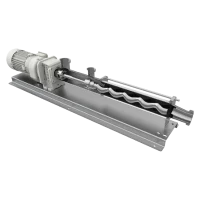

A screw pump is a positive displacement type of pumping equipment in which the liquid is moved by the rotation of a rotor inside a stator. During operation, sealed chambers are formed that ensure smooth movement of the medium without pulsations and sharp pressure drops. This design makes it possible to work efficiently with viscous, thick, abrasive and non-homogeneous products, including media with solid inclusions.
Screw pumps are used in the food, chemical and pharmaceutical industries, in the oil and gas sector and in wastewater treatment systems. They ensure a stable feed, gentle transfer of the product and can operate at high viscosity and under changing process conditions. The correct selection of pump parameters is the key to reliable system operation and to minimising equipment downtime.
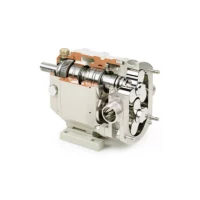

A type of positive displacement pump that transports liquids by the rotation of two synchronized cams (rotors). This principle ensures gentle, pulsation-free fluid transport, making these pumps ideal for handling sensitive, viscous and aggressive media.
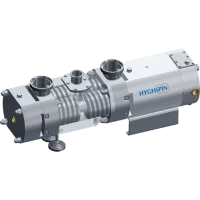
The twin-screw pump is based on two screws that rotate in opposite directions inside a sealed casing. The liquid is captured by the screws, forming hermetically sealed chambers, and is transported without shear forces and pulsations. Thanks to the special synchronization of the screws, contact between them is eliminated, which reduces wear and ensures a long service life.
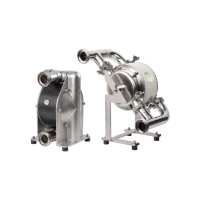

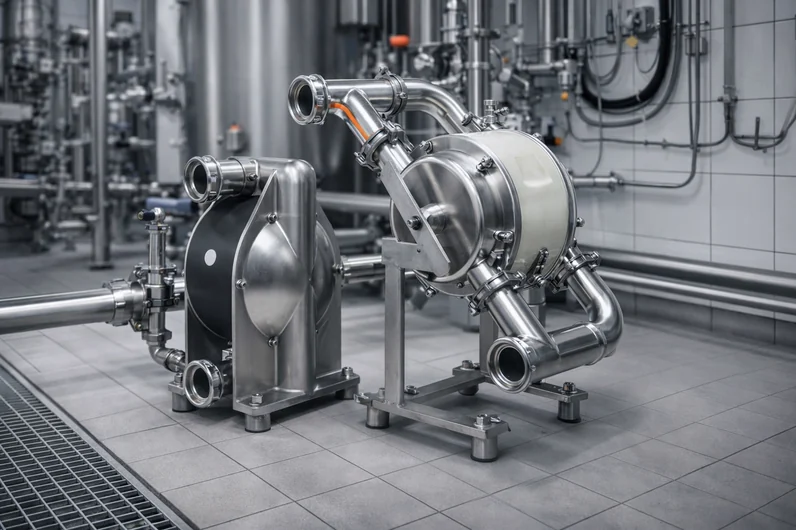
Diaphragm pumps are often used in CIP systems due to their ability to handle a variety of cleaning solutions, chemicals, and hot liquids.
These advantages make diaphragm pumps an indispensable choice for specific production environments where other types of pumps may be less efficient or insufficiently reliable.
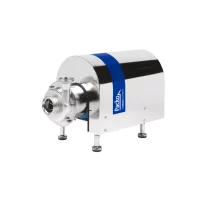

Like standard industrial centrifugal pumps, hygienic pumps work on the principle of centrifugal force. The impeller rotates in the casing, drawing liquid through the inlet and pushing it out through the outlet under pressure. However, the design of a hygienic pump has a number of key differences:
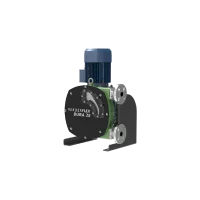

The basis of the operation of a peristaltic pump is a flexible hose through which the liquid is pumped, and rollers or shoes that create the compression. The movement of the rollers ensures an even transfer of the liquid, similar to waves pushing water along a narrow channel.This technology has several key advantages:
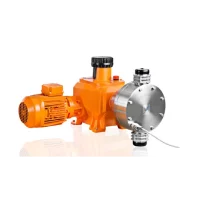

Dosing pumps are specialized equipment designed for precise dosing of liquids in various industrial and laboratory processes. Thanks to their ability to handle liquids of different viscosities, chemical composition and temperature, they are indispensable in the pharmaceutical, chemical, food and other industries.
Dosing pumps are classified into three main types depending on the delivery method:
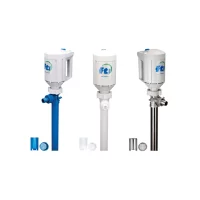

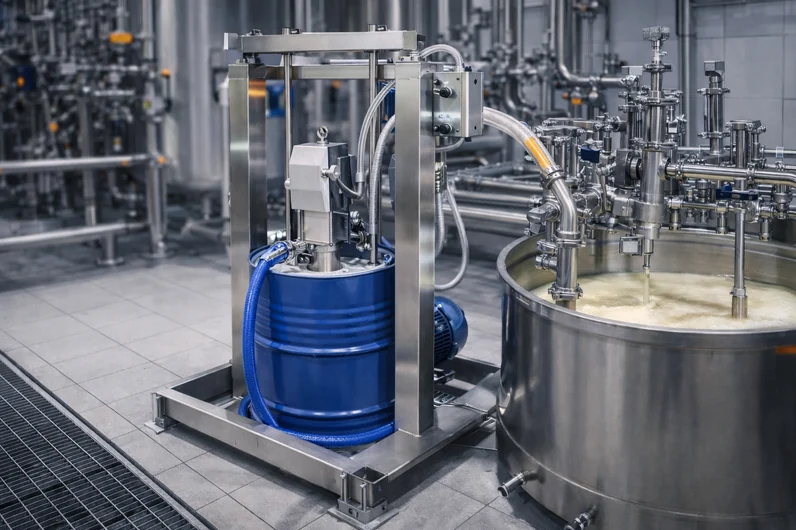
The barrel pump consists of a submersible part (tube), a motor (electric, pneumatic or manual drive) and a nozzle for connection to the barrel.
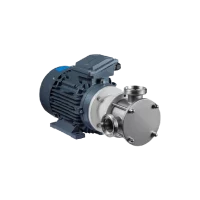

Impeller pumps (flexible impeller pumps) are positive displacement pumps which, thanks to their unique design, ensure efficient and gentle transfer of liquids. Their main feature lies in the use of a flexible impeller (a working wheel with vanes), which makes it possible to work with liquids of various viscosity, including delicate or abrasive ones or those containing solid particles.
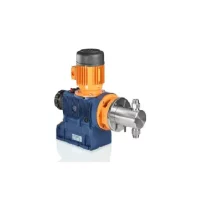
The plunger pump works on the principle of creating pressure in the chamber due to the translational movement of the plunger (piston). Main stages of operation:
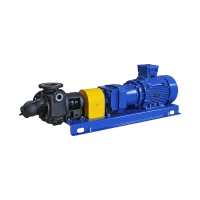

The main element of a gear pump is two gears that rotate inside the casing. One of the gears is connected to the drive, and the other is synchronised with it. When rotating, the gears create sealed chambers into which the liquid enters at the pump inlet and is moved along the inner walls of the casing to the outlet branch.
Our partners
Pumps and systems
Industrial pump systems
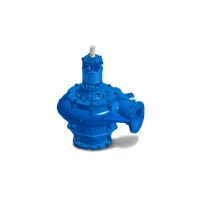

A slurry pump is a type of pumping equipment designed for transferring liquids with a high content of solid particles, such as slurry, pulp or suspensions. The design of such pumps is adapted to operation under conditions of increased wear: wear-resistant materials, reinforced impellers and special hydraulics are used, which makes it possible to transfer abrasive media efficiently without rapid destruction of the components.
Slurry pumps are widely used in the mining, metallurgical and chemical industries, in the power sector and in wastewater treatment systems. They ensure a stable feed even at a high concentration of solid inclusions, resistance to abrasive wear and reliable operation in complex process applications. The correct selection of the pump type, materials and operating mode is critical for the durability of the equipment and for minimising operating costs.
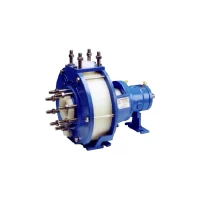

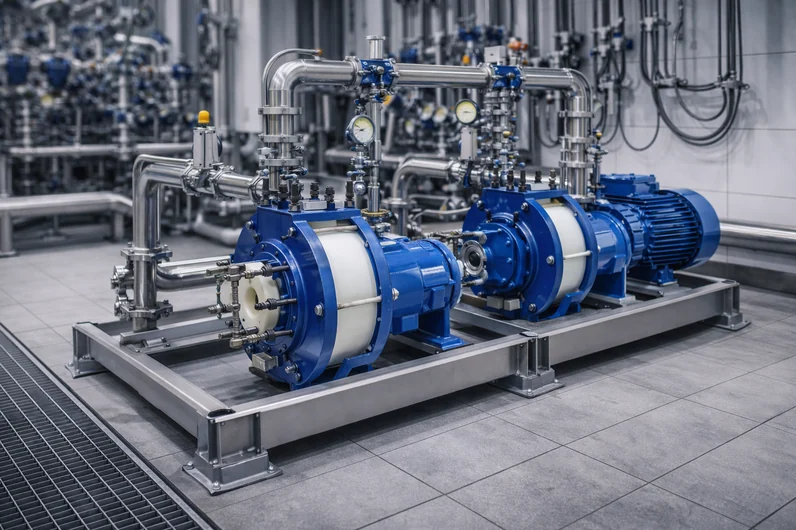
Chemical pumps are designed for transferring aggressive, toxic, highly viscous or hazardous liquids in various industries. Their design and materials ensure safety, reliability and a long service life even under the most demanding conditions.
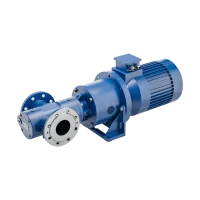

Three-screw pumps are high-technology pumping equipment that ensures smooth, pulsation-free transfer of liquids with low or high viscosity under constant pressure. Thanks to a unique design with three screws, these pumps combine efficiency, reliability and durability even under difficult operating conditions.
In industry, three-screw pumps are used for transferring lubricants, fuel oil, diesel fuel, polymer blends, technical oils and other liquids that require a gentle and stable feed. This is an ideal solution for the power sector, shipbuilding, mechanical engineering, the oil and gas sector and other industries.
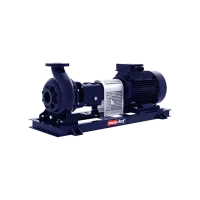

End suction pumps are centrifugal pumps with single-sided suction, designed for transferring liquids in a wide variety of systems. Thanks to a design with a horizontal shaft and a suction branch on one side, they ensure a stable flow of water, technical liquids or other media with high efficiency.
Operating principle:The liquid enters through the suction branch, is accelerated by the impeller and is discharged through the pressure branch. The basis of the operation is centrifugal force.
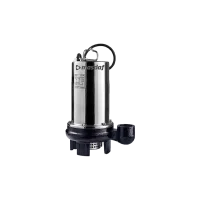
Submersible pumps are centrifugal pumps designed to operate directly in a liquid medium. Thanks to their sealed design and built-in electric motor, they can efficiently pump liquids from depth without requiring external suction.
Operating principle:The liquid enters through the inlet opening, is accelerated by the impeller and is delivered through the pressure branch. This ensures powerful and reliable operation even under difficult conditions.
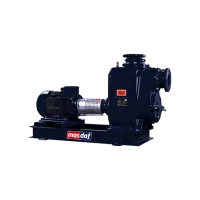
Self-priming pumps are centrifugal pumps that automatically remove air from the suction line and start pumping without prior priming. Their design includes a special chamber and an impeller, which makes it possible to create a vacuum and ensure the delivery of liquid from a lower level.
Operating principle:After start-up the pump draws in air together with the residual liquid in the casing, mixes them, creates a rarefaction and initiates the rise of the liquid to the impeller.
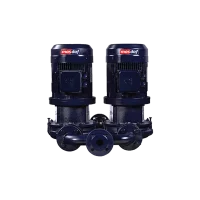
Circulation pumps are modern pumping equipment designed for transferring liquids in systems with direct in-line mounting. Thanks to a compact design with a vertical or horizontal arrangement of the branches, circulation pumps ensure a stable flow of water, technical liquids or effluent with minimal pressure losses. The basis of the operation of a circulation pump is the centrifugal force created by the rotating impeller, which moves the liquid through the inlet and outlet branches located on the same axis. These pumps perform the following functions:
Depending on the model, circulation pumps are available as single-stage pumps for simple applications or multi-stage pumps for high pressures.
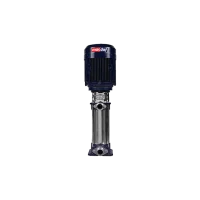
Multistage pumps are centrifugal pumps with several impellers, which successively increase the pressure of the liquid at each stage. Thanks to such a design, these pumps are ideally suited for systems where a high head capability with a stable feed is required.
Operating principle:The liquid passes through each stage of the pump, gaining pressure successively. This makes it possible to transfer the liquid efficiently to great heights or over long distances.
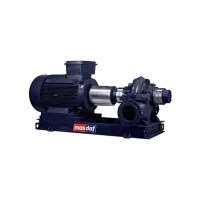
Split case pumps are centrifugal pumps with a horizontally or vertically split casing, developed for transferring large volumes of liquid with high efficiency. Their design provides for double suction, thanks to which the liquid enters the impeller from both sides, ensuring a stable feed with minimal load on the assemblies.
Operating principle:The pump casing is divided into two parts — this simplifies maintenance, allowing access to the internal components without dismantling the pipelines.
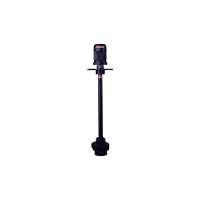
Drainage pumps are submersible or semi-submersible centrifugal pumps designed for removing water from flooded areas, tanks and low-lying places. They operate on the basis of centrifugal force, when the impeller feeds the liquid through the inlet opening and pushes it out through the pressure branch.
Purpose:Preventing the flooding of premises, technical facilities and areas where rainwater, ground water or domestic water accumulates.
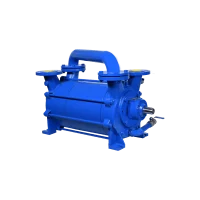
The operation of a vacuum pump is based on creating a pressure difference between the volume being processed and the surrounding environment. The main stages of operation are:
Our partners
Pumps and systems
Pumping and mixing systems
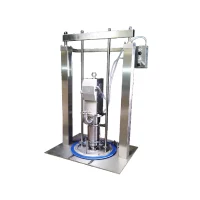

A liquid pumping-out system is a set of equipment designed for the safe and controlled withdrawal of product from drums, containers or other vessels. The operating principle is that a pump with a suction tube is installed directly into the container, after which the liquid is drawn in and delivered into the outlet pipeline.
Such systems may include various types of pumps depending on the medium: centrifugal — for low-viscosity liquids, gear pumps — for thick products, diaphragm pumps — for aggressive or abrasive media, screw pumps — for delicate products. Such systems are used in the food, chemical and pharmaceutical industries. They ensure a stable feed, a clean process and make it possible to work efficiently with liquids of various viscosity and chemical activity.
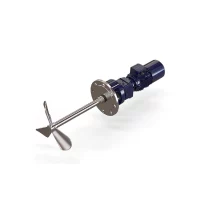

An agitator is a device designed to mix, emulsify, homogenise or disperse liquids and semi-solids. Due to their design and functionality, agitator mixers are widely used in various industries.
The agitator-mixer consists of an electric motor, a drive and a mixing element (blade, propeller, turbine) that rotates inside the tank. The movement of the mixing element creates a hydrodynamic flow that ensures uniform mixing of the components.
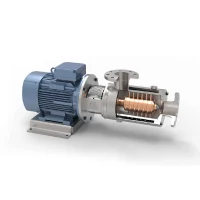

A dynamic mixer is high-technology equipment for intensive mixing, emulsifying, dispersing or homogenising liquid and semi-solid products. Thanks to the use of high-speed rotors and static components, dynamic mixers ensure uniformity and high quality of the end product. The basis of the operation of a dynamic mixer is the interaction between the rotating rotor and the stationary stator. During the rotation of the rotor the liquid or mixture passes through the gaps between the rotor and the stator, where it is subjected to intensive mechanical action:
Depending on the design, dynamic mixers can have multiple rotors and stators to increase efficiency.
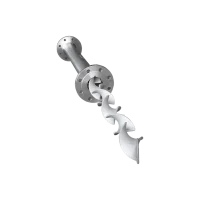

Static mixers are efficient and reliable equipment for mixing liquids, gases or slurries without the use of moving parts. Thanks to their simple design, energy efficiency and minimal maintenance, they have become indispensable in industrial processes. In this article, we'll look at how a static mixer works, what industries it's used in, and what its main advantages are.
Unlike dynamic mixers, a static mixer has no motors or rotating elements. Its operation is based on changing the direction of the flow by means of internal elements — spirals, blades or inserts, which create turbulence. Thanks to this, the components are mixed during the movement of the liquid or gas along the pipeline, without the need for an additional energy source.
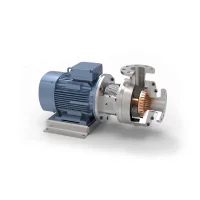
A homogenizer is equipment designed for the reduction, even distribution and mixing of particles in liquid and semi-solid media. The main purpose of using homogenizers is to obtain a stable and uniform mixture that does not separate over time. Homogenisation is based on creating high pressure and passing the liquid through a narrow gap between valves or plungers. During this process the particles are broken down or evenly distributed throughout the medium.
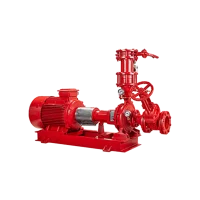
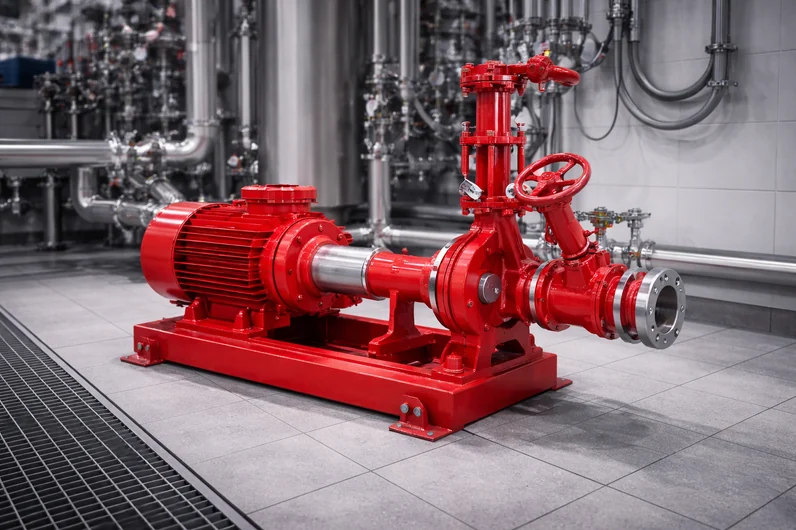
Fire pumps are specialised centrifugal pumps designed for the high-pressure delivery of water or other fire-extinguishing liquids in fire-fighting systems. They ensure a rapid response to a fire, delivering large volumes of liquid to sprinkler systems, hydrants or manual fire hoses.
Design:The pumps may be single-stage or multistage, with end suction, a split casing or a vertical shaft, depending on the needs of the system. The operating principle is based on the centrifugal force created by the rotating impeller.