
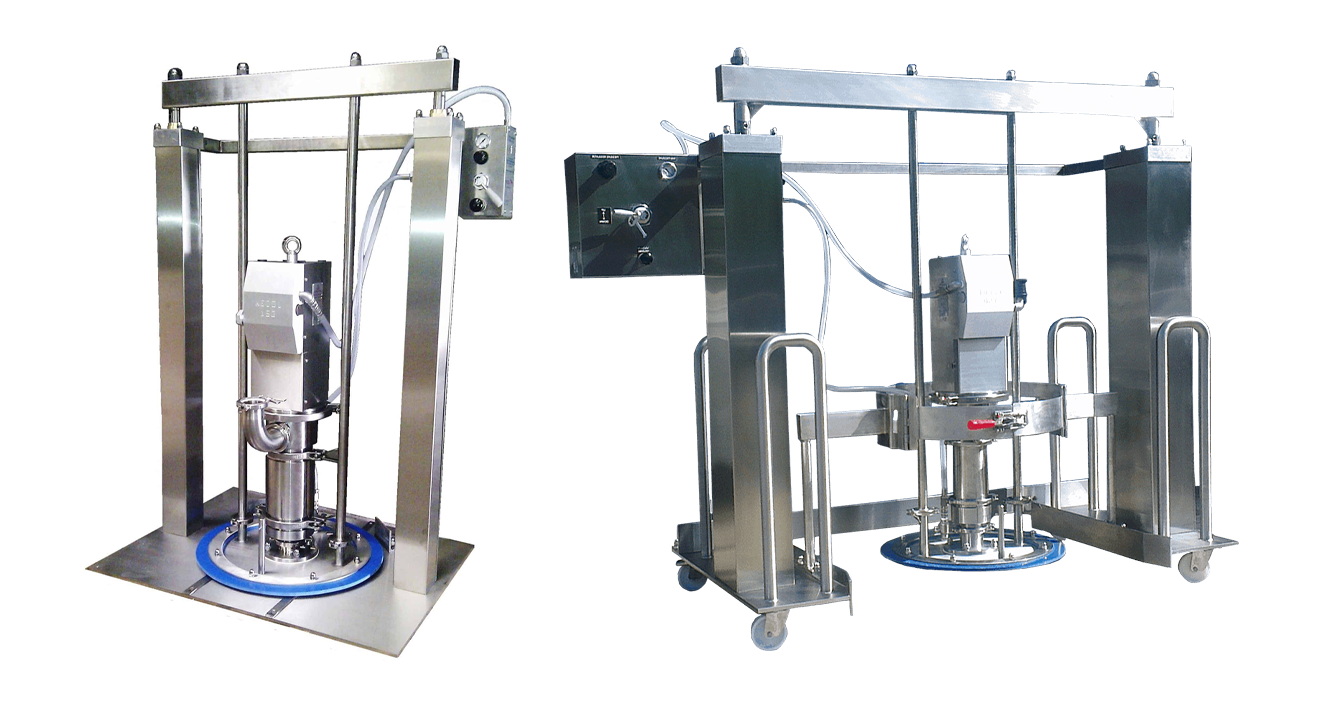


Pumping systems operate with a specialised pump that is installed directly into the drum or other container. The liquid is sucked by the pump through a submersible tube and fed into the outlet pipe.
The main stages of work:
- Immersing the pump in the barrel: The pumping tube is lowered into the interior of the container.
- Liquid suction: The pump's working element creates a vacuum or mechanical pressure to lift the liquid.
- Transportation: The liquid is pushed through the outlet to the desired delivery point.
Components of the pumping system
- Pump:
The central element that determines performance and fluid compatibility. The type of pump is selected according to the characteristics of the fluid:- Centrifugal pump: For liquids with low viscosity.
- Gear pump: For thick and viscous liquids.
- Diaphragm pump: For aggressive, abrasive or viscous media.
- Screw pump: For use with delicate products.
- Immersion tube:
The tube that goes down into the barrel. It is made of chemically resistant materials such as stainless steel, polypropylene or PVDF. - Reason:
- Electric drive: Delivers high performance and is suitable for continuous operation.
- Pneumatic drive: It is used in explosive atmospheres.
- Manual drive: An economical solution for small volumes.
- Controllers and filters:
Ensure accurate fluid delivery and cleaning before transport. - Additional accessories:
- Adapters for different types of containers.
- Fluid supply hoses.
- Automatic shutdown systems when the set level is reached.
Areas of application
- Chemical industry:
Pumping acids, alkalis, solvents and other aggressive substances from sealed containers. - Pharmaceuticals:
Precise dosing of active ingredients from containers to production lines. - Food industry:
Pumping out syrups, oils, liquid dough, dairy products and other foodstuffs. - Cosmetics industry:
Work with thick masses such as creams, shampoos, gels, oils. - Oil and gas industry:
Pumping fuels, oils, greases and other petroleum products. - Cleaning systems:
Pumping out reagents, detergents and disinfectants.
Features of pumping systems
- Compatible with various liquids:
Thanks to a wide range of materials, the systems are suitable for transporting aggressive, viscous, thick, toxic and delicate liquids. - Mobility:
The systems are easy to install and move between different tanks. - Energy efficiency:
Modern models consume minimal energy while providing high performance. - Durability:
High-quality materials ensure a long service life, even in harsh environments. - Performance control:
The pumping speed can be adjusted to suit the fluid characteristics.
How to choose the right barrel pumping system?
- Fluid characteristics:
- Take into account the viscosity, chemical composition, temperature and aggressiveness of the working environment.
- Material of execution:
- Polypropylene or PVDF for aggressive substances.
- Stainless steel for food or petroleum products.
- Productivity:
- Select a pump with the appropriate flow rate for the volume of the vessel.
- Type of drive:
- Electric for large volumes.
- Pneumatic for explosive environments.
- Manual for cost-effective solutions.
- Protection systems:
- Availability of dry running protection, automatic shutdown or overflow sensors.


