

Heat exchangers
-
 Exclusive partner
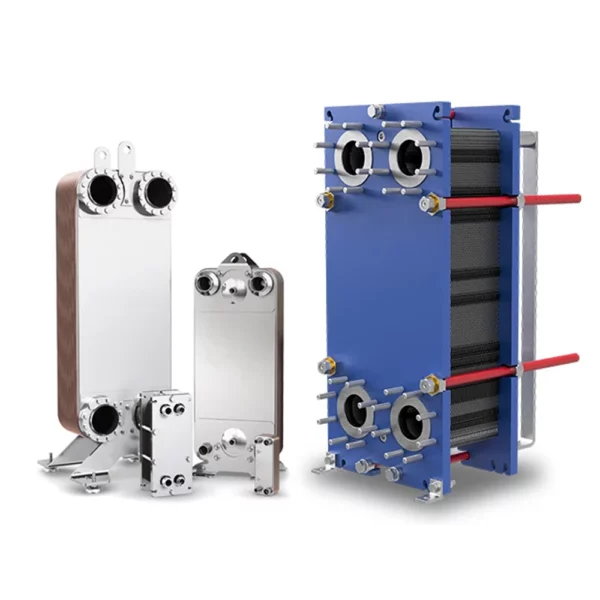
Equipment
Showing all 2 results

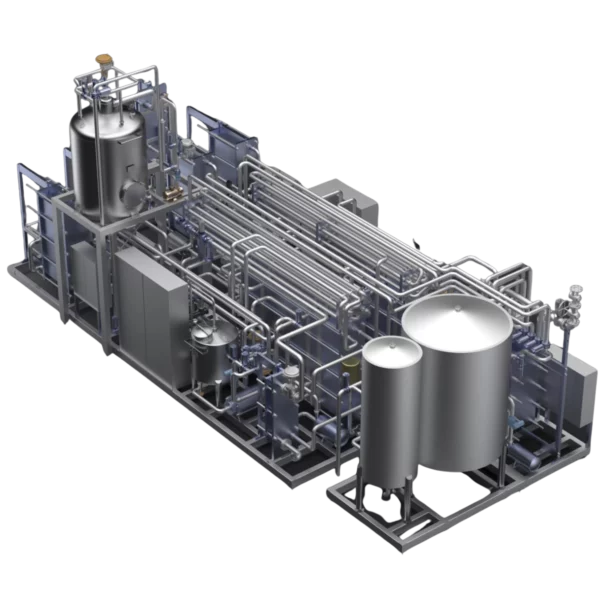
Frequently asked questions about heat exchangers
Which type of heat exchanger should be chosen for food production?
Plate heat exchangers — for liquids without inclusions and with low viscosity; they are compact and efficient. Tubular ones — for viscous products and products with particles. Scraped-surface ones — for very viscous masses and products prone to burning on. The type is determined by the properties of the product and not only by the budget.
How does pasteurisation differ from in-line sterilisation?
Pasteurisation works at lower temperatures and extends the shelf life under chilled storage. In-line sterilisation (UHT) uses higher temperatures and a short holding time, which gives long storage without refrigeration. Both processes are implemented on heat exchange equipment with a holding section.
How often is maintenance needed and why does efficiency fall?
The main cause of falling efficiency is deposits on the heat transfer surfaces. The CIP cleaning schedule is determined by the product and the operating regimes. For plate units, periodic inspection of the gaskets and, if necessary, dismantling and cleaning of the plate pack are additionally provided for.
Do you supply spare parts for heat exchangers of other manufacturers?
Yes, the supply of plates and gaskets for heat exchangers is a separate area of Steiner’s business. For the selection we need the type and model of the unit, and also the operating conditions: product, temperatures, pressure.
Can a heat exchanger be built into an existing line?
Yes. We check the heat balances, the available sources of steam or hot water, the capacity of the pumps and the control system, after which we propose a pipework layout and the scope of the installation work.