TMXFLOW - Barrel pumping system
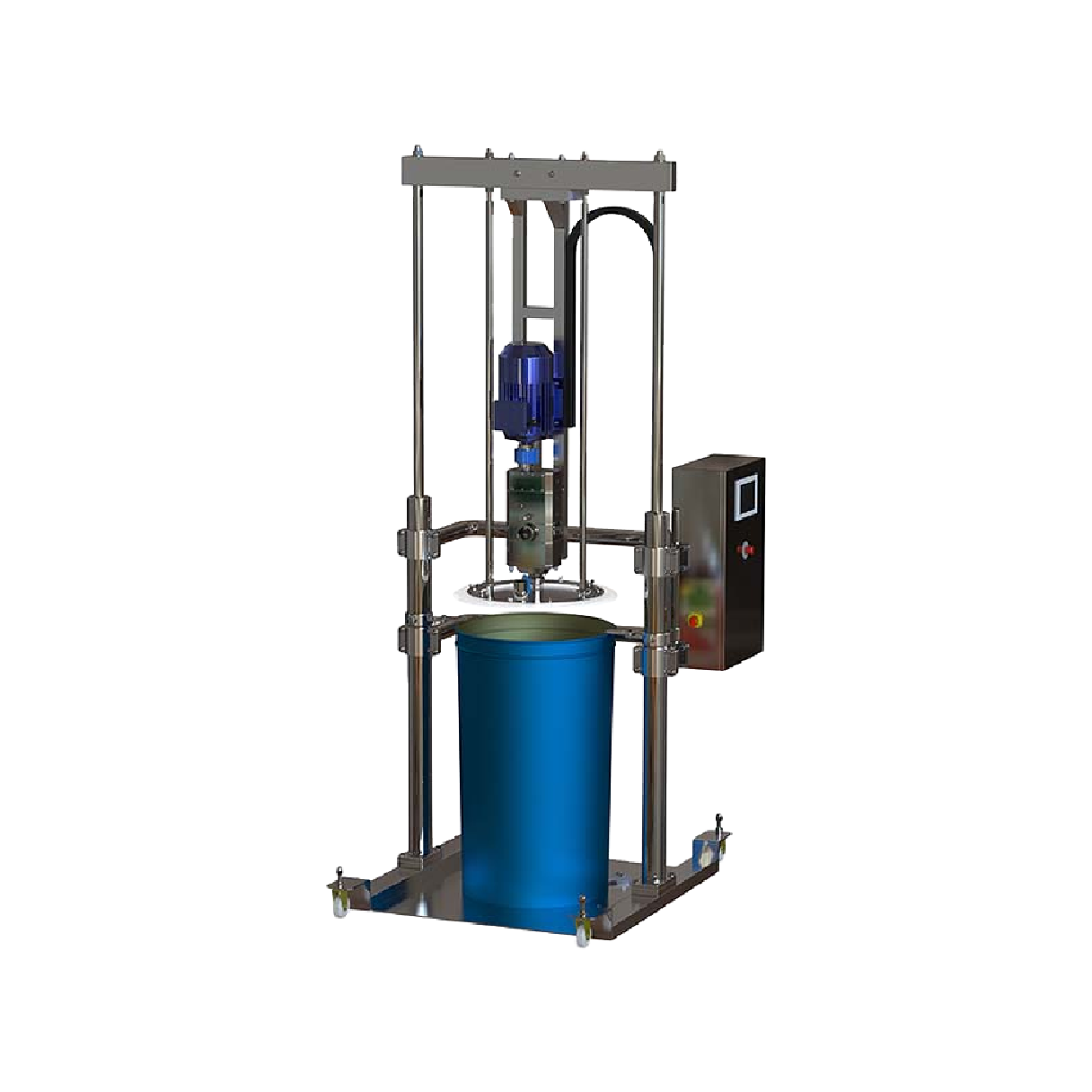
The TMXFLOW drum unloading system transfers high-viscosity products from standard 200-litre drums directly onto the production line. Drum emptying efficiency reaches 99 per cent thanks to a pressure plate that fits tightly against the drum walls. Parts in contact with the product are made from AISI 316/316L stainless steel, and the design is compatible with CIP cleaning.
Barrel drainage system: how the pressure plate works
In a barrel containing paste or gel, the product does not flow by gravity — it does not run and retains its shape. A standard pump on the suction line does not work here: it creates a channel through the product and then pumps air.
The system handles this mechanically. The pressure plate is lowered into the vat from above and driven downwards by a double pneumatic piston. The plate is designed so that its edge, fitted with a silicone scraper, makes full contact with the barrel wall. As it moves downwards, it scrapes the product from the walls and pushes it towards the outlet.
At the same time, the pump creates a vacuum beneath the plate, and the product follows it without any interruption in the flow. The tight contact between the plate and the wall has another benefit — no air pocket forms between the plate and the product, so no air bubbles enter the production line.
Why is the residue in the barrel less than 1 per cent?
An emptying rate of up to 99 per cent is the result of three factors working together, not just one.
Firstly, the geometry of the plate. It matches the inner profile of the barrel, so no layer of product remains on the walls that the plate has not reached. Secondly, there is a silicone scraper along the edge, which removes any residue from the sides as the plate passes over them. Thirdly, there is a vacuum beneath the plate, which prevents food from sticking to its underside.
For an expensive product, this represents a direct economic benefit. In a 200-litre barrel, every percentage point of residue equates to two litres, which are disposed of along with the container. The difference between 95 per cent and 99 per cent emptying for a batch comprising several dozen barrels is already significant.
Barrel drainage system: technical specifications
| Parameter | Value |
|---|---|
| Container | standard 200-litre industrial drums |
| Emptying | up to 99 per cent |
| Pressure | up to 12 bar |
| Pump rotational speed | up to 3,000 min⁻¹ at 50 Hz |
| Product temperature | −10…+120 °C with EPDM gaskets |
| CIP washer | up to 140 °C, for no more than 30 minutes |
| Type of pump | single-screw or twin-screw |
| Details regarding the product | AISI 316 / 316L |
| Other steel components | AISI 304 |
| Gaskets | EPDM or FPM |
| Shaft seal | single or double end-face |
| Surface roughness | Ra < 0.8 µm |
| Hob drive | double pneumatic piston |
| Management | HMI, automatic and manual modes |
The system comprises: a pump, a motor, a piston, a support frame, a pressure plate with a silicone scraper, a manual valve, wheels, an electrical cabinet, drum holders and a moving mechanism.
A pump with low shear and product integrity preservation
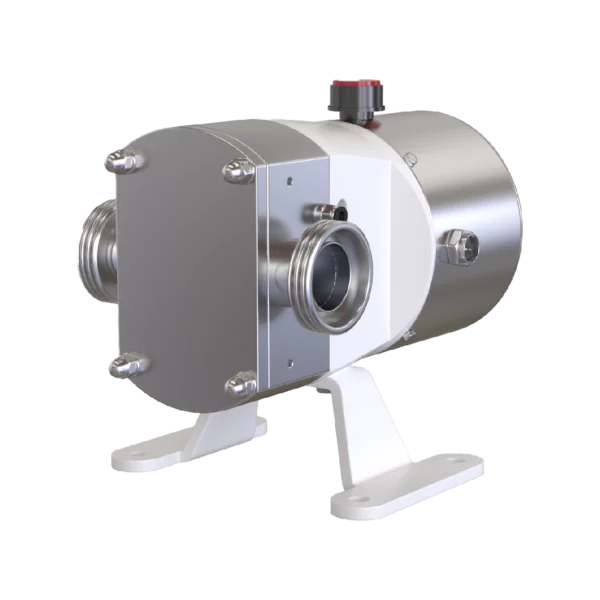
The pump in the system is a positive displacement pump: single-screw or twin-screw, depending on the model. Both types are classified as low-shear pumps.
This is crucial for products with a structured consistency. The centrifugal pump accelerates the product within the impeller and breaks it down: the emulsion separates, the gel loses its viscosity, and the solids are ground down. A positive displacement pump transfers a fixed volume per revolution without intense shear, so tomato paste remains a paste and the cream does not separate into phases.
A second consequence of the volumetric system is that the flow rate does not depend on the line resistance. The number of revolutions determines the amount of product dispensed, regardless of the length of the pipework to the dispenser.
Controls: HMI, automatic and manual modes
The system is controlled via the HMI panel. This is used to set the pressure, flow rate and process parameters; both automatic and manual modes are available.
In automatic mode, the cycle is carried out with a single command: the plate is lowered, the product is transferred, and once the process is complete, the system returns to standby mode, ready for the next barrel. The operator does not need to monitor the process manually from start to finish.
Manual mode is used during commissioning, when working with a new product, or when it is necessary to draw off part of the contents rather than the entire barrel.
The wheeled frame and barrel holders mean that the system is moved between plots rather than being fixed in one place.
Barrel drainage system and CIP washing system
The components are compatible with on-site cleaning. The surfaces of the parts in contact with the product have a roughness of Ra < 0.8 µm, which ensures that residues are washed away by the flow of the cleaning solution without the need for disassembly.
The CIP cleaning mode allows temperatures of up to 140 °C for a maximum of 30 minutes. The operating temperature range for the product with EPDM seals is from −10 to +120 °C. If the medium is incompatible with EPDM, FPM seals are available.
The shaft is sealed using a single or double mechanical seal. A double seal is used for products that harden or polymerise on exposure to air, and also when a barrier is required between the product and the environment.
For which products is the barrel-emptying system designed?
The manufacturer names three sectors with specific products.
Food production — tomato paste and chocolate. Cosmetics — creams and petroleum jelly. Chemicals — resins. Suitability for use in the pharmaceutical and personal care industries is specifically stated.
A common feature is their high viscosity and the fact that the product is supplied in barrels rather than tankers. It is impossible to drain such a product by gravity, and it is impractical to scoop it out by hand; losses in the process amount to a percentage of the consignment’s value.
Selection and service from Steiner Ukraine
For a pumping system, the selection is determined by the product and the container. The viscosity and structure of the product determine the type of pump and the permissible shear; the compatibility of the product with the materials determines the gaskets and seal design; the size and type of drum determine the geometry of the plate and holders.
We specify the product and its viscosity at operating temperature, the temperature range, shear sensitivity, the type of container, the required flow rate, the connection point on the line and the cleaning parameters. Based on this, we determine the pump model, the materials for the seals and the system configuration. Next come supply, service and spare parts. Steiner Ukraine has been operating in the industrial equipment market since 2006.
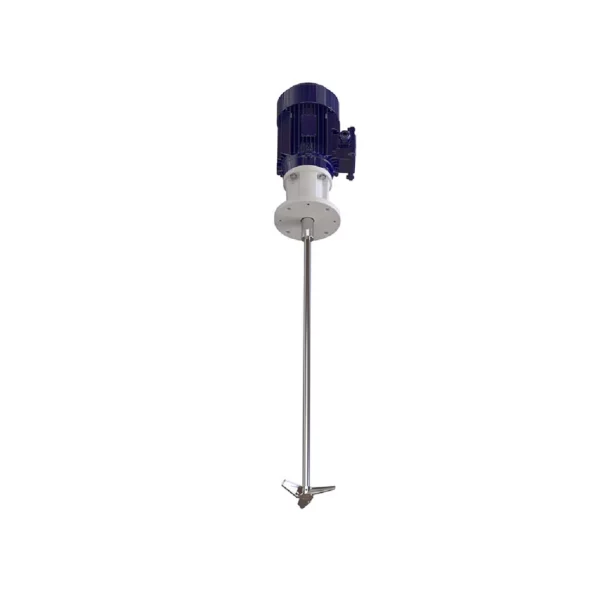
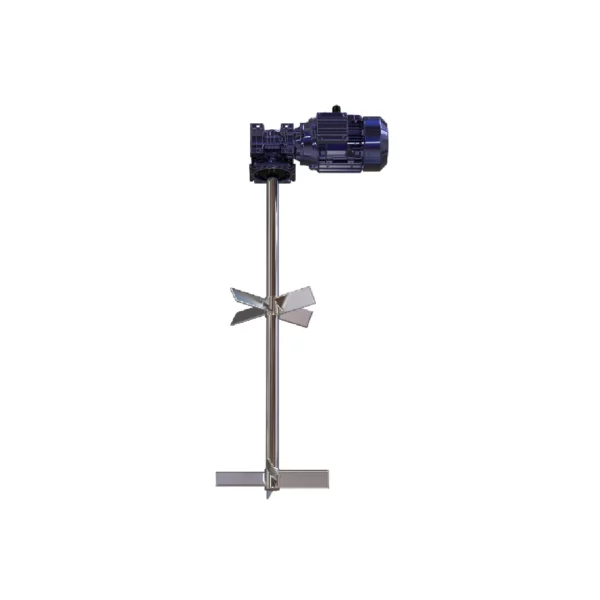
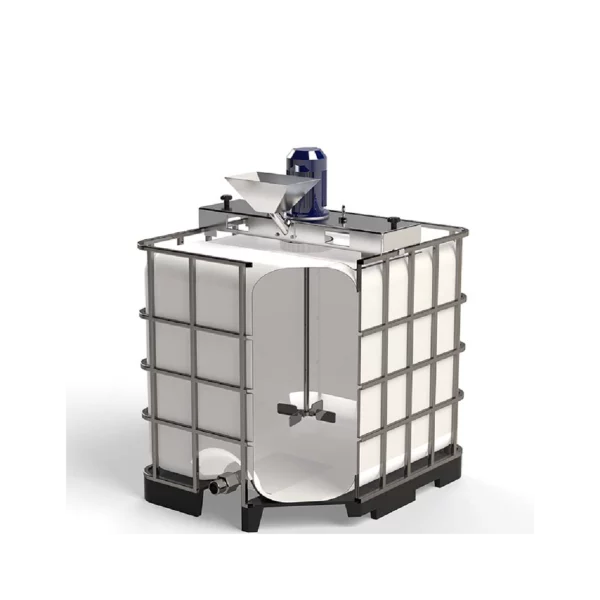
Designed for mixing in containers IBC mixer. The manufacturer’s other products can be found on this page TMXFLOW, other equipment — in the section pumping and mixing systems and in the catalogue pumps for the food industry.
Manufacturer: TMXFLOW
Category: Barrel pumping systems
Industries: Food, Beverages, Pharmaceutical, Other
Model range: 1 position