LIVERANI - Impeller pump (GR)
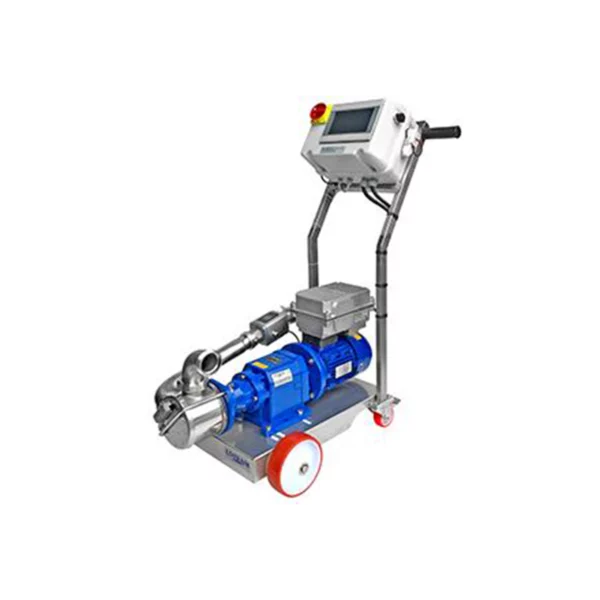
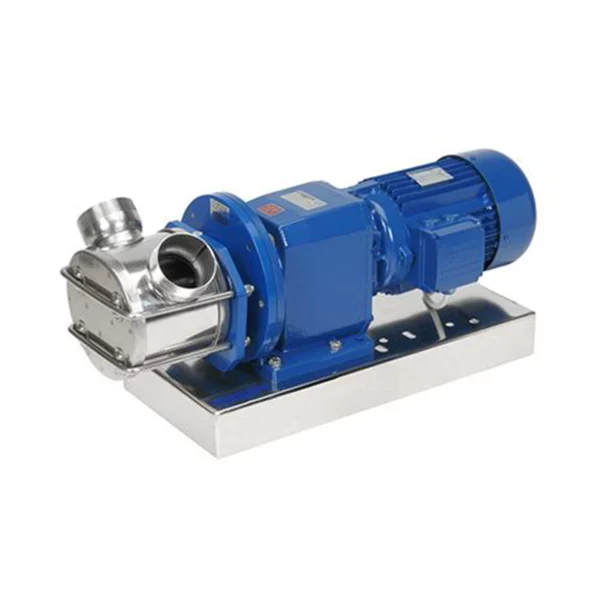
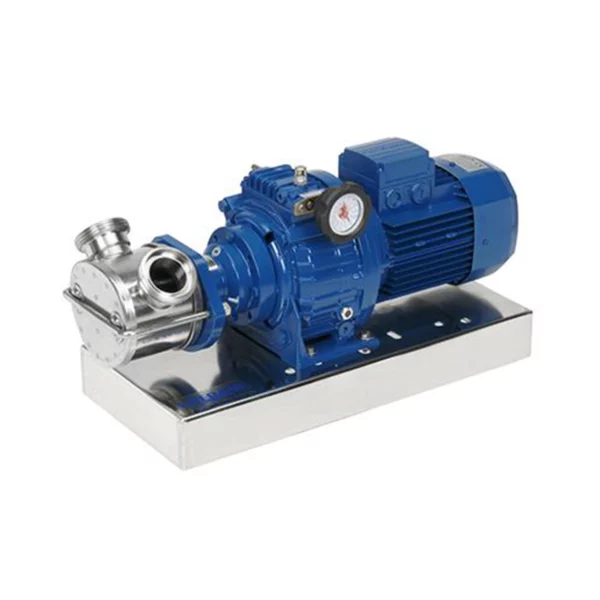
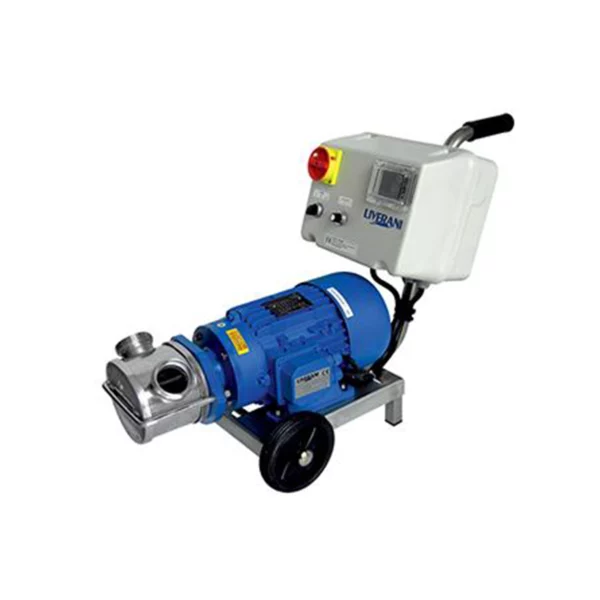
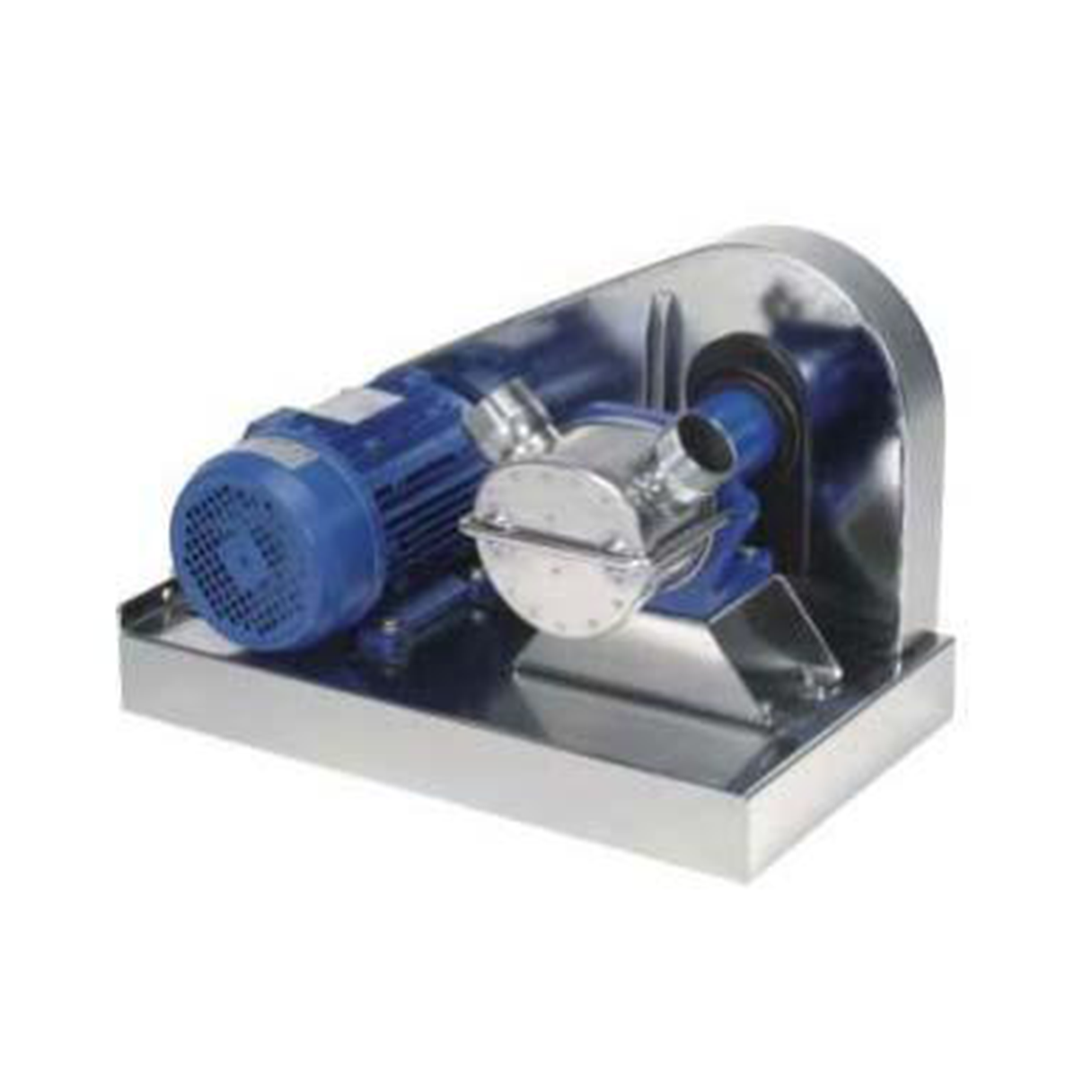
The LIVERANI GR pump is a belt-driven, self-priming impeller pump, mounted on a base or on a trolley. Manufacturer: LIVERANI s.r.l. (Via De’ Brozzi 94, 48022 Lugo, Province of Ravenna, Italy). The company was founded in the 1950s. The equipment is manufactured in accordance with CE standards.
The series comprises three sizes: GR MINOR 40, GR MAJOR 60 and GR MAXI 80. The motors are three-phase. According to the manufacturer’s technical data sheet, the maximum flow rate is 43,800 litres per hour, with a head of up to 40 metres. These are the highest figures in the LIVERANI range of impeller pumps.
LIVERANI GR pump: technical specifications
| Parameter | Value |
|---|---|
| Type | impeller-type self-priming, flexible impeller |
| Drive | belt drive from the electric motor |
| Implementation | on the base or on a trolley |
| Standard sizes | MINOR 40, MAJOR 60, MAXI 80 |
| Flow rate, max. as per the data sheet | 43,800 litres per hour |
| Pressure, max. as per the data sheet | 40 m |
| Maximum pressure drop | 4 bar |
| Motor | three-phase |
| Power | from 1 to 4.5 kW, depending on the model and the selected motor |
| Rotational speed | discrete values in the range 235–700 rpm |
| Medium temperature | up to +100 °C |
| Viscosity of the medium | up to 50,000 cP |
| Housing material | AISI 304 or AISI 316 stainless steel |
| Impeller material | NR, CR, NBR, EPDM or VMQ |
| Shaft seal | face-type mechanical |
| Self-priming | up to 6 m |
| Reverse side | Yes, it works in both directions of rotation |
| Accession | DIN 11851, Garolla, BSP, Macon, Triclover, SMS, BSM/RJT |
A head of 40 m corresponds to the maximum pressure head of 4 bar specified by the manufacturer for this range: 4 bar for water is approximately 40.8 m of water column. LIVERANI provides the values for temperature, viscosity, self-priming and reverse flow for the entire range of impeller pumps.
Three sizes: MINOR 40, MAJOR 60, MAXI 80
| Size | Engine power | Weight at the base | Weight on the trolley | Revolutions |
|---|---|---|---|---|
| GR MINOR 40 | 1.0–1.5 kW | 36–45 kg | 38–46 kg | 235, 300, 350, 470, 700 rpm |
| GR MAJOR 60 | 1.5–2.2 kW | 42–51 kg | 44–53 kg | 235, 300, 470, 700 rpm |
| GR MAXI 80 | 1.8–4.5 kW | 65 kg | 67 kg | 300, 470, 600, 700 rpm |
Power and weight are given as ranges, as a single model size is available with different motors. A heavier motor delivers higher revs and greater flow, but also increases the unit’s weight. The trolley adds around 2 kg.
What are the benefits of a belt drive?
In the GR series, power is transmitted from the electric motor via a belt drive. The motor and pump are mounted separately on a common frame, rather than on a single shaft.
First consequence: the pump’s rotational speed is determined by the gear ratio, not by the motor’s frequency. The data sheet shows discrete speed values — 235, 300, 350, 470, 600 and 700 rpm, depending on the size. The flow rate is adjusted by changing the gear ratio, rather than by a frequency converter.
Second consequence: the pump operates at low speeds with a standard motor running at 1,400 or 2,800 rpm. This is of fundamental importance for an impeller pump. Low speeds result in better chamber filling, less shear and less wear on the elastomeric impeller.
Third consequence: the belt acts as a safety device. If it becomes jammed, it slips rather than transmitting torque to the pump shaft.
There are also limitations. The speed does not change whilst the machine is running — to change it, you need to change the gear. If you need to adjust the feed rate smoothly whilst the machine is running, you should choose a model with a frequency converter.
Performed at the base or on a trolley
A site-mounted version involves permanent installation on a frame. The unit is placed on a foundation or on the site.
The trolley version is essentially the same unit on wheels. It is rolled up to the tank, the hoses and power supply are connected, the liquid is pumped, and then it is rolled away. Weighing between 38 and 67 kg, depending on the model, the trolley can be moved by hand.
Trolley-mounted units are used where a single pump serves several stations: for transferring wine between tanks in the winery, for draining from various containers, and for seasonal work. This is the most common option for winemaking and small-scale food production.
How a flexible impeller works
The impeller is made of elastomer and has flexible blades. As the impeller rotates, the blades deform against the casing wall. Enclosed volumes are formed between them, which draw in the fluid at the inlet and carry it to the outlet.
This results in four characteristics. The first is self-priming up to 6 m without flooding. The second is a volumetric flow rate: the flow rate is proportional to the speed. The third is gentle pumping: the product does not pass through a high-shear zone, so its structure remains intact and the product is not aerated. The fourth is that the pump allows solid particles to pass through in a suspended state without grinding them up.
The pump is reversible and operates in both directions of rotation. It is used to drain the pipeline.
The limitation stems from the elastomer. The pump self-priming, but prolonged operation without fluid in the casing is not permitted: the impeller blades come into contact with the casing wall and are destroyed by dry friction.
Impeller material: NR, CR, NBR, EPDM or VMQ
| Material | Designation | Typical application |
|---|---|---|
| Natural rubber | NR | water, wine, general food liquids |
| Neoprene | CR | oils, moderately corrosive media |
| Nitrile | NBR | fats, mineral oils, petroleum products |
| EPDM | EPDM | hot water, cleaning solutions, alkalis |
| Silicone | VMQ | food and pharmaceutical products |
The casing is made from AISI 304 or AISI 316 stainless steel. The shaft seal is a mechanical face seal. The impeller is supplied as a separate spare part, so the material can be changed when it is replaced.
The LIVERANI GR pump, as the most efficient series in the range
According to the manufacturer’s data, the GR model delivers the highest performance figures in the LIVERANI range of impeller pumps.
| The series | Flow rate, max. as per the data sheet | Pressure, max. as per the data sheet |
|---|---|---|
| GR | 43,800 litres per hour | 40 m |
| INV BS | 22,500 litres per hour | 27 m |
| MINIVERTER | 5,760 litres per hour | 27 m |
The reason lies in the drive system. The belt drive allows for the installation of a more powerful motor of up to 4.5 kW and enables the selection of a gear ratio to achieve the required speed. In monoblock designs, the power output is limited by the layout.
Practical conclusion: if a flow rate of more than 22,500 l/h is required, the GR model from the LIVERANI range of impeller pumps is the right choice. If, on the other hand, smooth flow regulation is required during operation, then it is INV BS or MINIVERTER, but with a lower limit in terms of consumption.
How to choose a LIVERANI GR pump at Steiner Ukraine
Seven pieces of information are required for selection: the required flow rate in litres per hour, the head or pipeline resistance in metres, the name of the product, its viscosity and temperature, the presence and size of any solid particles, the type and size of the connection, and the steel grade of the casing.
It is specified separately whether the unit is floor-mounted or on a trolley. Another consideration is whether feed adjustment is required during operation. If so, a belt drive is not suitable, and the choice should be directed towards models fitted with a converter.
Steiner Ukraine supplies LIVERANI equipment together with design calculations, complete sets and spare parts, including impellers made from various elastomers. The scope is described in the section services. Sector-specific recruitment — in sector-specific solutions. The technical specifications of the original source are published at the LIVERANI website.
Frequently Asked Questions
What is the maximum flow rate of the LIVERANI GR pump?
43,800 litres per hour, according to the manufacturer’s data sheet. This is the highest figure in the LIVERANI range of impeller pumps.
How many sizes are there in the GR range?
Three: MINOR 40, MAJOR 60 and MAXI 80. Each is available in a floor-standing or trolley-mounted version.
What is the drive system in the GR series?
Belt drive from a three-phase electric motor. Motor power: from 1 to 4.5 kW, depending on the model.
Can the flow be adjusted?
The feed rate is determined by the transmission ratio; in other words, it is selected at the time of configuration and cannot be changed during operation. The data sheet lists speeds of 235, 300, 350, 470, 600 and 700 rpm. For smooth speed control during operation, models with a frequency converter are used.
What is the maximum head?
40 m according to the data sheet. This is consistent with the maximum pressure drop of 4 bar specified by the manufacturer for this range.
How much does the pump weigh?
From 36 kg for the MINOR 40 (base model) to 67 kg for the MAXI 80 (on a trolley). The weight depends on the model and the selected motor.
Is the pump self-priming?
Yes, up to 6 m. The pump primes the suction line automatically, without the need for manual priming.
Is it safe to run the pump dry?
Prolonged operation without fluid in the housing is not permitted. The flexible blades come into contact with the housing wall and are damaged by dry friction.
Does the pump allow solid particles to pass through?
Yes, in its weighed state, without being crushed. The permissible size is determined when selecting the wheel based on its size and material.
How much does a LIVERANI GR pump cost?
The price depends on the size, motor power, whether it is a floor-mounted or trolley-mounted model, the grade of steel used for the casing, the material of the impeller and the connection type. Please send us the flow rate, head, product name and connection type — and we will prepare a quotation.
Manufacturer: LIVERANI
Category: Impeller pumps
Industries: Food, Beverages, Pharmaceutical, Other
Model range: 3 positions