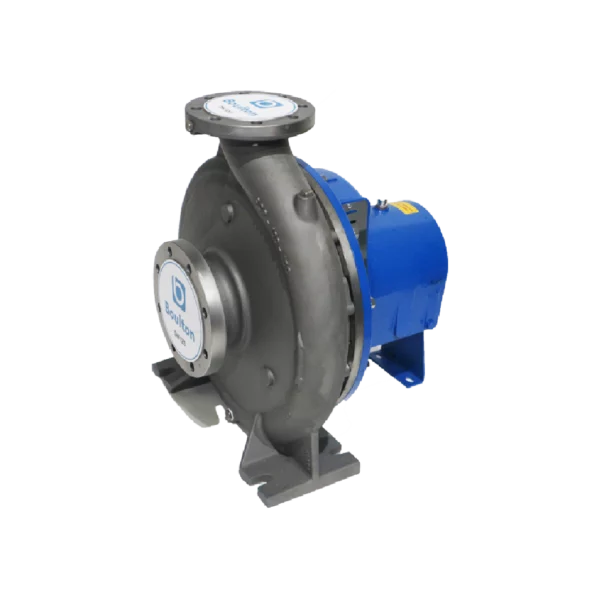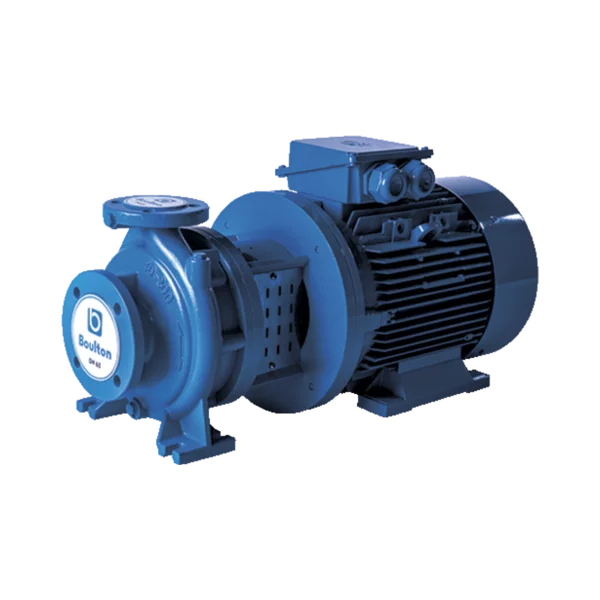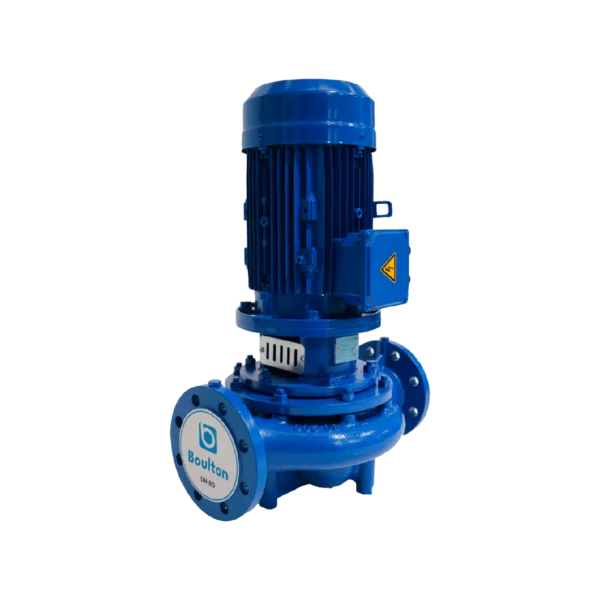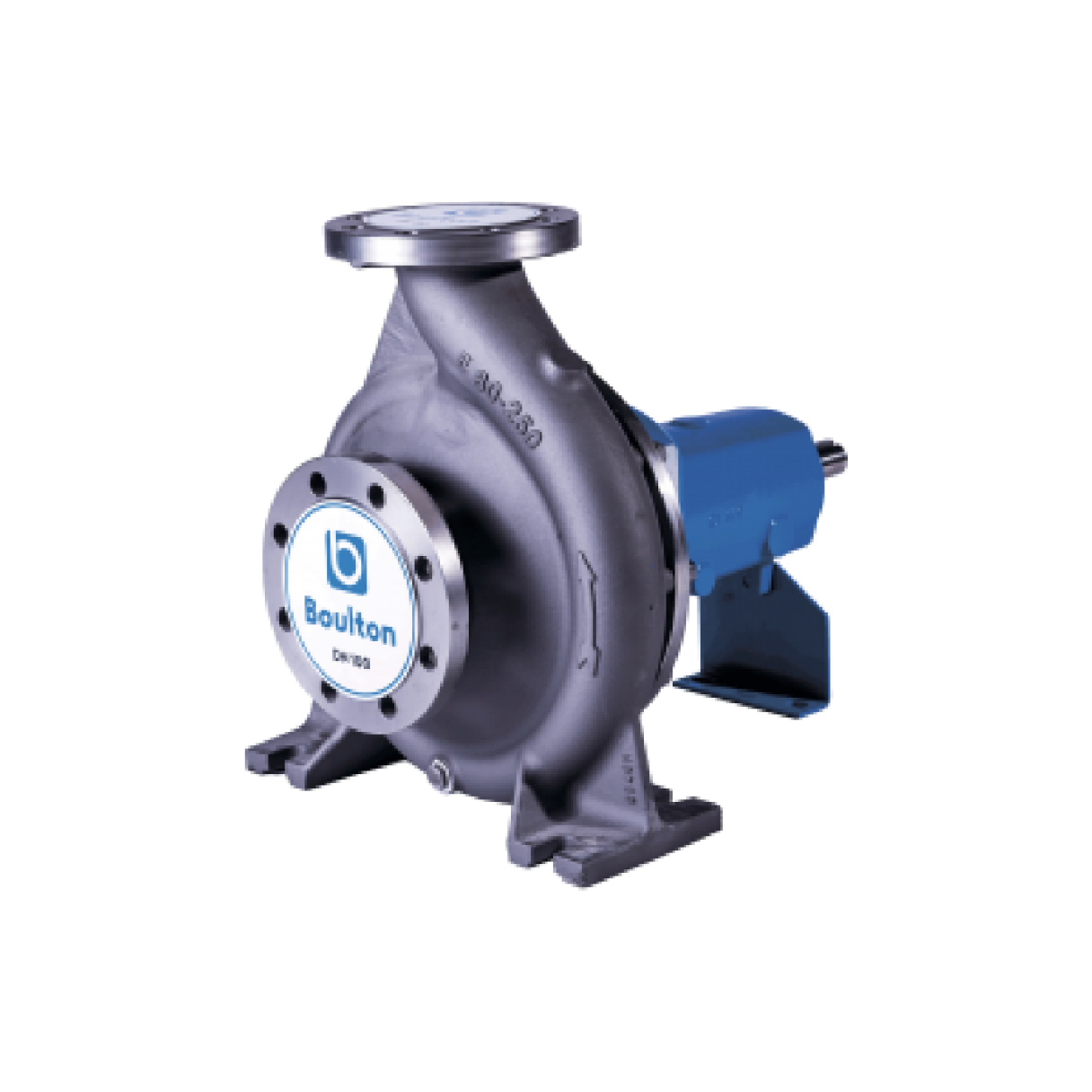
Boulton pumps – ESN/ESH centrifugal pump in accordance with DIN 24255 (EN 733)
The Boulton ESN/ESH pump is a horizontal centrifugal pump manufactured in accordance with standard DIN 24255, also known as EN 733. The manufacturer is Boulton Pumps, Polígono Industrial de Santelices 7, 48550 Musquís, Biscay, Spain. The company was founded in 1997 and manufactures pumps at its own production facility in Muskis.
This series is designed for clean or moderately contaminated, low-viscosity liquids. Flow rate: up to 1,750 m³/h; head: up to 105 m; nominal diameters (DN) from 32 to 250. Fluid temperature: from −10 to +140 °C. Casing pressure: 10 bar, with a 16 bar version available. Speed: up to 3,600 rpm.
Boulton ESN pump: technical specifications
| Parameter | Value |
|---|---|
| Type | horizontal centrifugal, single-stage |
| Standard | DIN 24255 (EN 733) |
| Flow rate, max. | 1,750 m³/h |
| Pressure, max. | 105 metres |
| Standard sizes | DN 32–250 |
| Number of sizes | 46 |
| Medium temperature | from −10 to +140 °C |
| Casing pressure | 10 bar, 16 bar version |
| Rotational speed | up to 3600 rpm |
| Impeller | closed, open, vortex or duct-type |
| Materials | cast iron, steel, bronze, stainless steel, Hastelloy, other alloys |
| Workmanship | made entirely or partly from cast iron, AISI 316, DUPLEX, SUPERDUPLEX |
| Shaft seal | end-face, various types, in accordance with API specifications |
| Flanges | DIN 2632 / PN 10 or DIN 2633 / PN 16 |
| Mass | from 8 to 640 kg, depending on the model |
A water head of 105 m corresponds to approximately 10.3 bar, which is consistent with a casing pressure of 10 bar. For higher heads, a 16-bar version is used.
What do the DIN 24255 and EN 733 standards mean?
DIN 24255 and its European version, EN 733, specify the connection and overall dimensions of single-stage centrifugal pumps: flange diameters and positions, shaft centre height, distance between supports, and base plate dimensions.
The practical implication is one and very specific. A pump from any manufacturer, produced to this standard, can be fitted in place of another without any modifications to the pipework or the foundation. The pipes, anchors and frame remain the same.
This is a crucial factor when replacing a worn-out pump in an operational production facility. There is no need to cut pipes, pour a new foundation or halt production whilst the unit is being overhauled.
This standard means that spare parts and hydraulic specifications for model sizes are comparable across manufacturers. Selection using the curve is quicker, as the model size designations are interpreted in the same way.
Forty-six standard sizes, ranging from 32–125 to 250–500
The series comprises 46 sizes. The designation indicates the diameter of the discharge pipe and the nominal diameter of the impeller.
| DN | Standard sizes |
|---|---|
| 32 | 32-125, 32-160, 32-200, 32-250 |
| 40 | 40-125, 40-160, 40-200, 40-250, 40-315 |
| 50 | 50-125, 50-160, 50-200, 50-250, 50-315 |
| 65 | 65-125, 65-160, 65-200, 65-250, 65-315, 65-400 |
| 80 | 80-160, 80-200, 80-250, 80-315, 80-400 |
| 100 | 100-160, 100-200, 100-250, 100-315, 100-400 |
| 125 | 125-200, 125-250, 125-315, 125-400 |
| 150 | 150-200, 150-250, 150-315, 150-400, 150-500 |
| 200 | 200-260, 200-315, 200-400, 200-500 |
| 250 | 250-315, 250-400, 250-500 |
The weight ranges from 8 kg for the smallest model to 640 kg for the 200-500 series. The fine-grained increments within the range allow the operating point to be selected close to the optimum point on the curve, without excessive feed allowance.
Four types of impeller
The manufacturer offers four impeller designs, and the choice depends on the composition of the fluid.
A closed impeller offers the highest efficiency and the lowest friction losses. It is used for clean liquids.
An open impeller allows fine particles to pass through. It is used where there are suspended particles in the medium, but there is no need to grind them.
The vortex impeller creates a rotational flow within the casing, whilst the product itself comes into almost no contact with the blades. This method is used to pump fluids containing large or fibrous particles.
The channel impeller has a limited number of wide channels and is designed for contaminated liquids containing large particles.
The impeller type affects the pump curve; therefore, it is specified at the selection stage, together with the model and size, rather than afterwards.
Housing and seal materials in accordance with API specifications
The pump is manufactured from cast iron, steel, bronze, stainless steel, Hastelloy or any other metal alloy. The manufacturer also specifies that the pump may be made entirely or partly from cast iron, AISI 316, DUPLEX or SUPERDUPLEX.
Partial construction means that the expensive material is used only on the parts that come into contact with the medium, whilst the housing remains made of cast iron. This reduces costs without compromising strength where it is needed.
DUPLEX and SUPERDUPLEX are used in chloride-containing and seawater environments where AISI 316 is susceptible to pitting corrosion.
Shaft seals — face seals, of various types, manufactured in accordance with API specifications. API specifications set out the flushing, cooling and monitoring procedures for the seal: seal fluid supply, circulation and drainage. For aggressive and high-temperature media, these factors determine the service life of the seal.
The flanges are manufactured in accordance with DIN 2632 for PN 10 or DIN 2633 for PN 16.
For which media is the Boulton ESN pump designed?
The manufacturer specifies this series for clean or moderately contaminated, low-viscosity fluids.
Stated applications: general water supply for air conditioning, industrial use, fire-extinguishing systems, irrigation and other services involving clean or slightly contaminated liquids.
The temperature range from −10 to +140 °C covers coolants, process water and hot circuits.
Models made from AISI 316, DUPLEX and SUPERDUPLEX expand the scope of application to corrosive environments, whilst the vortex and channel impellers are suitable for liquids containing solids.
ESN / ESH, amongst the manufacturer’s other ranges
| The series | Type and standard | Flow rate, max. |
|---|---|---|
| ESN / ESH | horizontal, in accordance with DIN 24255 (EN 733) | 1,750 m³/h |
| ESM | centrifugal, in a monoblock design | as per the specification |
| ESK | in accordance with ISO 5199 (2858) and ASME B73.1 | as per the specification |
| IL | vertical in-line in accordance with EN 733 | 200 m³/h |
ESN / ESH and IL are manufactured to the same EN 733 standard, but their configurations differ: the ESN is mounted horizontally on a support frame, whilst the IL is fitted vertically directly into the pipework. The ESN provides a significantly higher flow rate — 1,750 versus 200 m³/h.
The ESN series differs from the ESK series in terms of standards. The ESK is manufactured in accordance with the ISO 5199 and ASME B73.1 process standards, which set stricter design requirements for heavy-duty chemical processes.
How to choose a Boulton ESN pump at Steiner Ukraine
Six pieces of information are required for selection: flow rate in m³/h, required head in metres, the name or composition of the fluid, its temperature, the presence and size of solid particles, and the system pressure.
Three factors are determined separately. The first is the type of impeller based on the composition of the fluid: closed, open, vortex or channel type. The second is the material, either fully or partially: cast iron, AISI 316, DUPLEX or SUPERDUPLEX. The third is the seal type and API classification according to operating conditions.
If you are replacing an existing pump in accordance with EN 733, please specify its model number — selection in accordance with the standard is carried out without the need to modify the pipework.
Steiner Ukraine supplies Boulton equipment, including design, configuration, commissioning and spare parts. The scope is described in the section services. Industrial pumps — in the section industrial pumps, centrifugal — in the section centrifugal pumps. Sector-specific recruitment — in sector-specific solutions. The technical specifications of the original source are published at the Boulton Pumps website.
Frequently Asked Questions
What do DIN 24255 and EN 733 mean?
This is the standard for connection and overall dimensions of single-stage centrifugal pumps. A pump complying with this standard can be fitted in place of a pump from another manufacturer without the need to modify the pipework or the foundation.
What is the maximum flow rate of the Boulton ESN pump?
1,750 m³/h at a head of up to 105 m.
How many sizes are there in the range?
Forty-six, ranging from 32–125 to 250–500, with nominal diameters (DN) from 32 to 250.
What impellers are available?
Closed, open, vortex and channel. The type is selected based on the composition of the fluid and affects the pump curve.
What materials are available?
Cast iron, steel, bronze, stainless steel, Hastelloy and other alloys. The design may be made entirely or partly from cast iron, AISI 316, DUPLEX or SUPERDUPLEX.
What are API compression plans?
Standard face seal circuit configurations: seal fluid supply, flushing, cooling and drainage. These determine the service life of the seal in aggressive and high-temperature environments.
What is the permissible ambient temperature?
From −10 to +140 °C.
What pressure is the casing designed for?
10 bar as standard, 16 bar as an option. Flanges in accordance with DIN 2632 / PN 10 or DIN 2633 / PN 16.
How much does the pump weigh?
From 8 kg in the smallest size to 640 kg in the 200–500 version.
How much does a Boulton ESN/ESH pump cost?
The price depends on the size, material, impeller type, seal and API specification. Models made from DUPLEX or SUPERDUPLEX are significantly more expensive than cast iron ones. Please send us the flow rate, head, medium and temperature — we will prepare a calculation.