
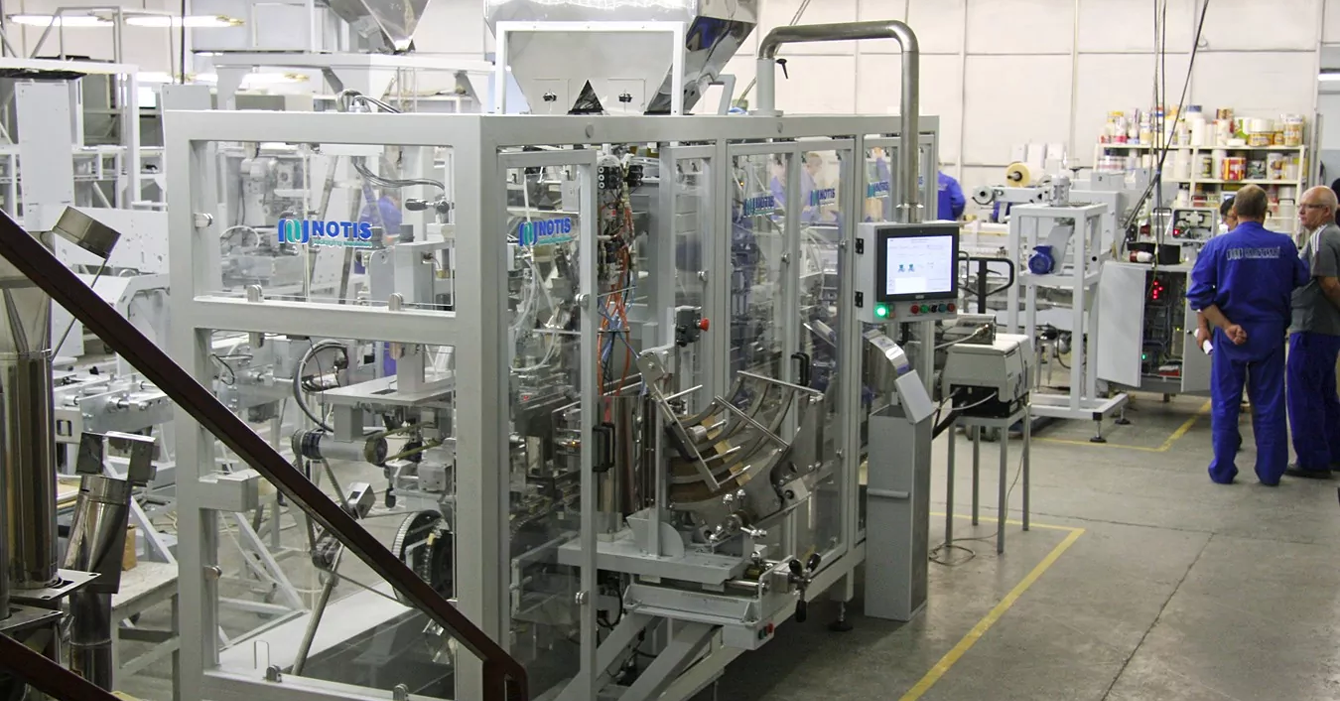
The modern market dictates the conditions for existing production facilities, demanding a high degree of product variability from them. For companies this means the need to switch quickly between different types of containers. For example, from glass bottles of complex shapes to PET containers or canisters of different volumes. But adapting a packaging line is not simply a matter of replacing the holders. It is a whole complex task for engineers. And even a minor error in the calculations leads to increased downtime or damage to components. Few people think about how architectural decisions affect the overall effectiveness of the equipment.
The technical architecture of changeover: from mechanics to automation
The basis of any adaptive line is the balance between the speed of changeover and the cost of implementing the changes. There are three main levels of flexibility in packaging systems:
- Manual adjustment using scales and indicators. This is the basic level, where the operator physically changes the position of the guides, the height of the labelling units or the grippers. The main risk here is the human factor. Without digital position counters every changeover becomes a process of «fitting». This takes up hours of working time.
- The use of interchangeable format parts. For containers that differ radically in geometry, adjusting the guides is not enough. Individual feed screws, star wheels and cams are required. The effectiveness of this method depends on the fixing system. «Tool-less» solutions make it possible to reduce the changeover time several times over.
- Full servo-drive automation. This is the most advanced method, where the format change takes place at the press of a single button on the HMI panel. Servomotors automatically set the width of the conveyors, the height of the dosing heads and the capping parameters. Such an approach is justified for lines with a high frequency of changeovers.
If the production runs long batches, investment in full automation of the changeover assemblies may take too long to pay off. In small-batch production, automation is the only way to maintain profitability.
The influence of container geometry on the dosing and capping assemblies
The most important areas during a format change are the points of direct contact with the product and the cap.
Dosing. When the container volume changes (for example, from 0.5 l to 5 l), the question of the system’s inertia arises. Piston dosers require mechanical adjustment of the piston stroke. Whereas electromagnetic or mass flow meters are adapted through software. An incorrect choice of nozzle or improper synchronisation of the filling head lift speed leads to contamination of the container on the outside. And this makes quality labelling impossible at the subsequent stages.
Capping. This is the unit where the greatest number of problems arise when switching between different types of caps (screw, push-on, trigger). Adaptation requires not only changing the chuck, but also readjusting the torque. The use of magnetic couplings or servo capping heads makes it possible to control the force precisely. In this way it is possible to prevent deformation of the plastic thread or under-tightening. This is critical for tightness and logistics.
Synchronisation of linear processes and the logic of conveyor systems
The most common mistake encountered when adapting a line is ignoring the dynamics of container movement between the units. Different containers have a different centre of gravity and coefficient of friction. Therefore the following points should be given attention:
- Container stability — tall narrow bottles are prone to tipping over during an abrupt start or stop of the conveyor. Adaptation requires a review of the acceleration profiles in the frequency converters of the drives.
- Spacing — when switching to a wider container, the feed pitch has to be changed. If the system of worms or star wheels is not designed for such a range, jams occur, which stops the whole line.
- Buffering — different formats may have different capacity. For example, a thick liquid takes longer to pour into a large container. The control system must adapt the speed of all line components in good time in order to avoid overfilling of the accumulation tables.
The company's engineers must regard the line as a single organism. A change of one parameter in it automatically corrects the operating vectors of all the sensors and drives.
Optimising the changeover: minimising losses and validating the results
The consequence of wrong decisions during adaptation is «hidden downtime». This refers to the case where the line is formally started up, but works at a reduced speed because of constant minor failures. To achieve maximum efficiency when implementing multi-format capability, it is necessary to introduce SMED (Single-Minute Exchange of Die) protocols.
The main factors of successful adaptation:
- The use of colour coding or RFID tags for interchangeable parts in order to rule out the installation of an unsuitable element.
- All adjustments must be made from a zero starting point, and not relative to the previous position.
- Storage of all parameters (speed, pressure, temperature, timings) in the controller memory for each SKU.
Timely modernisation of assemblies and flexible control systems allow a company to be mobile and to minimise the unit cost of each product by reducing technical time losses. The professional components presented on the Steiner company website, together with an understanding of the physics of the processes, make it possible to create a stable line that does not require constant intervention by service engineers.


