

Filling into PET containers, glass, tin cans
-
 Exclusive partner

Equipment
Showing all 9 results
-
 Exclusive partner
 -
 Exclusive partner
 -
Exclusive partner
Frequently asked questions about filling into PET, glass and tin cans
What types of filling are used and how do they differ?
Gravity filling — for still liquids of low viscosity. Isobaric — for carbonated drinks, filling takes place at equalised pressure in order to preserve the carbon dioxide. Weight filling — for an accurate dose regardless of foam and density. Volumetric piston filling — for viscous products and products with inclusions.
What is a monoblock and what is it for?
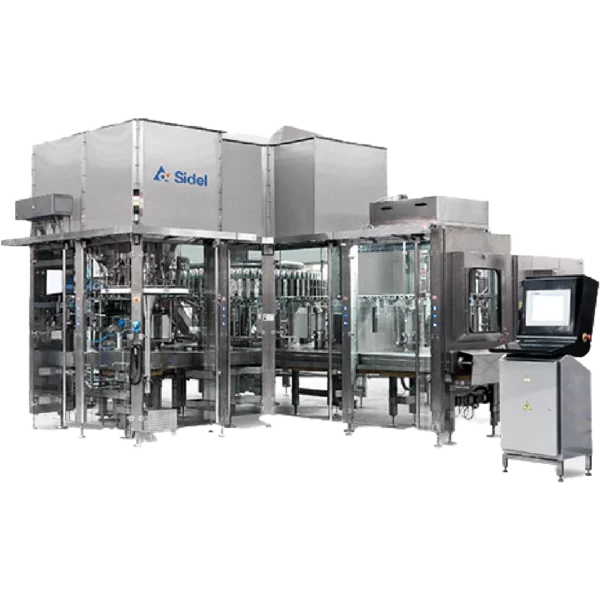
It is a rinser, filler and capper combined in a single unit with a synchronised drive. A monoblock is more compact, has fewer container transfer points, holds the speed more steadily and is simpler to service than three separate machines with conveyors between them.
What are the specifics of filling carbonated drinks?
An isobaric filler and control of the product temperature are required: a warmer drink foams more and loses gas. Smooth pressure release modes and good capping are also important — otherwise CO2 losses will show up after the line, during storage.
Can PET, glass and cans be handled on one line?
Partly. Different types of container require different conveying, gripping and capping systems, so a universal line is always a compromise. The practical solution is a line built around the main type of container with format parts for several sizes, rather than an attempt to cover all materials at once.
How long does changeover between formats take?
On modern lines with quick-change format parts and setting memory — from a few dozen minutes. If you have many SKUs, the changeover time affects the actual output more than the rated speed, so it has to be built into the technical specification from the outset.