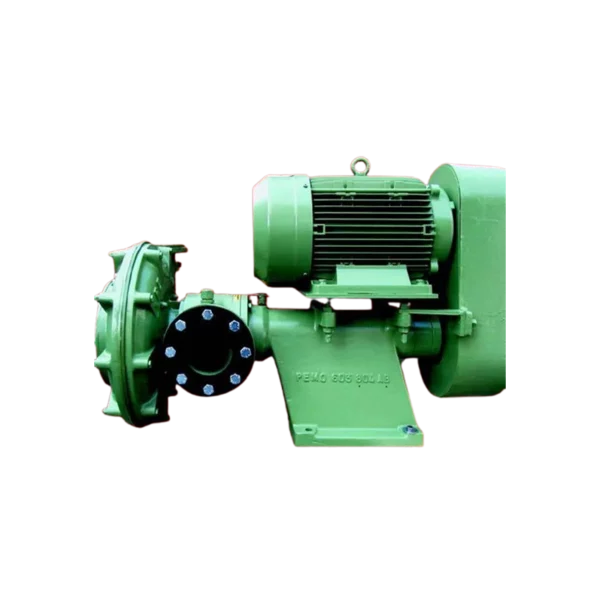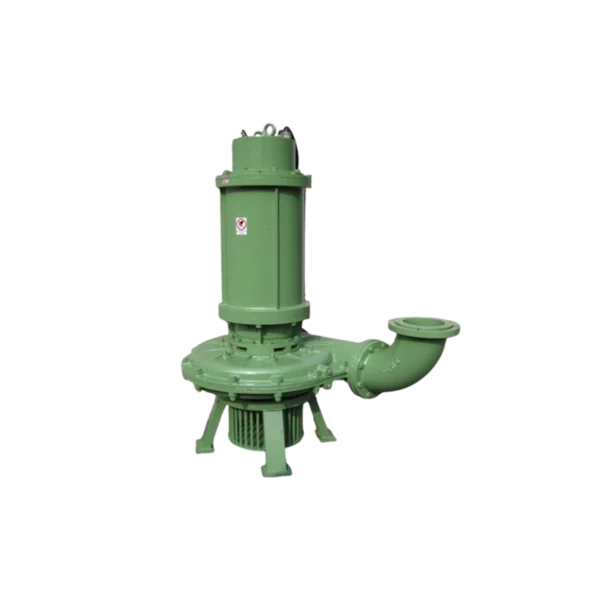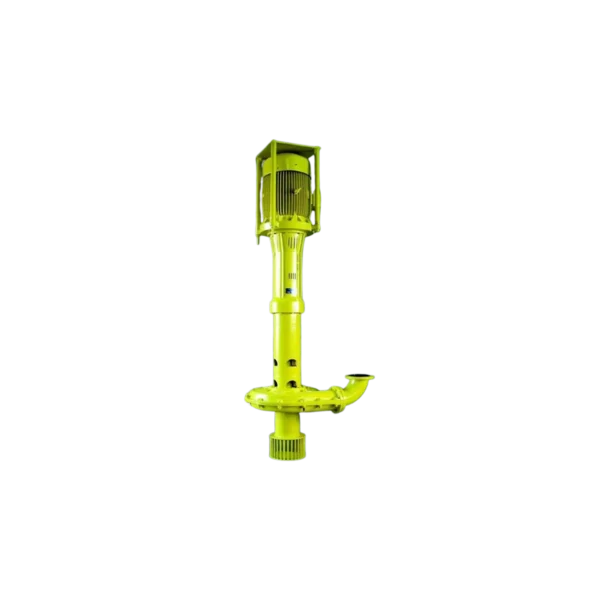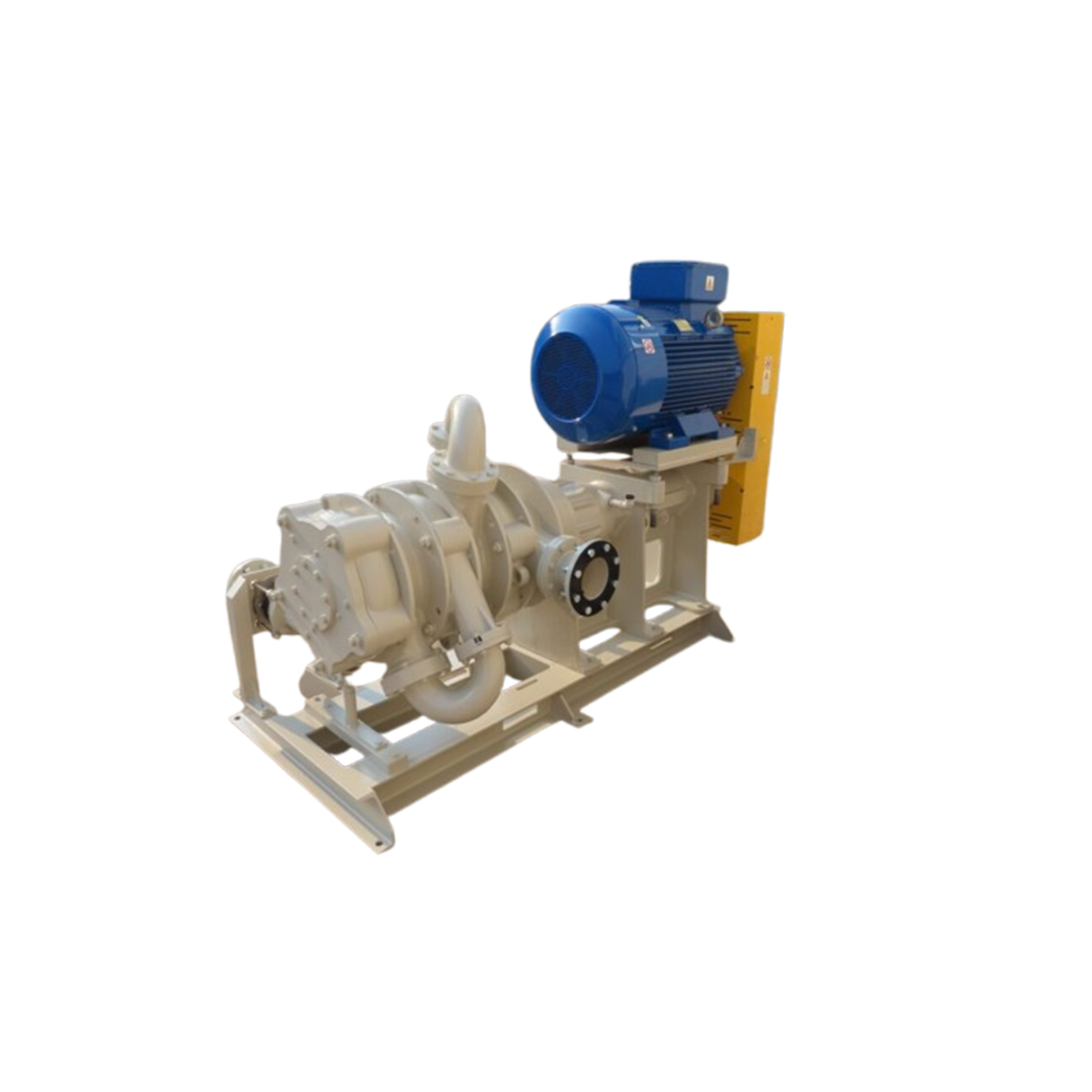
Pemo Pumps - Multistage pump (two and three stage)
Pemo multistage pump The AO/AB/DC series feature two or three impellers on a single shaft, connected in series. The flow rate ranges from 5 to 900 m³/h, the head is up to 210 metres water gauge, and the operating pressure is up to 24 bar in the Hardalloy execution.
The main purpose of the series, according to the manufacturer's description, is filter press feed and slurry transportation where the geodesic head or pipeline losses are too great for a single-stage pump.
Steiner Ukraine supplies Pemo Pumps equipment to Ukraine: media sizing, material selection, supply, service, spare parts.
What is a Pemo multistage pump?
This is the same AO/AB horizontal slurry pump with a side inlet, but with two casings on a common shaft. The casings work in series: the second takes the flow from the first and adds its own head to it.
The key property of a series connection is the flow rate remains constant, only the head increasesSo the pump doesn't lose performance from the addition of the second stage.
The series features a side inlet, a design inherited from the AO/AB series. Thanks to this, the mechanical seal is exposed to pressure at the inlet rather than at the discharge. When handling abrasive slurries at pressures of 20+ bar, this directly determines the service life of the friction pair.
Other equipment from this manufacturer can be found on the page Pemo Pumps.
What parameters does the AO/AB/DC series have?
| Parameter | Value |
|---|---|
| Implementation | two housings on one shaft, in series |
| Capacity | 5–900 m³/h |
| Maximum head | 210 m water column (certain Hardalloy variants) |
| Working pressure | 12–15 atm as standard |
| Maximum pressure | 24 bar in full Hardalloy construction |
| Maximum particle size | 1 mm, depending on the application |
| Operating temperature | up to 90 °C |
| Bodies | rubber-coated or Hardalloy |
| Impellers | Hardalloy |
| Shaft and acid seal chamber | special alloys |
The manufacturer provides separate figures for the capacities: 12 models of two-stage pumps with a drive from 30 to 250 kW and a delivery rate from 30 to 600 m³/h.
Overall, in the multi-stage range, the manufacturer offers over 40 models.
Why is a Pemo multistage pump used with a filter press?
A filter press works like this: the suspension is pumped into the chambers under pressure, the water passes through the cloth, and the solid phase remains as a cake. The higher the feed pressure at the end of the cycle, the drier the cake.
A single-stage pump reaches its head limit. A multistage pump exceeds it.
| What does a multistage pump provide for a filter press |
|---|
| Final pressure in excess of 20 bar in three-stage models and some two-stage models |
| Drier cake than a single-stage pump provides |
| Flow rate when the press is full: up to 2,000 m³/h |
| Constant flow rate as head increases throughout the cycle |
The manufacturer explicitly names filter press feed as an area where it has little to no competition.
A drier cake is not a technical detail, but economics. Less residual moisture means a smaller volume of waste for disposal and lower costs for subsequent drying.
How many degrees are there and what does it give?
The manufacturer has four options regarding the number of stages.
| Implementation | Impellers | Head / pressure as specified by the manufacturer |
|---|---|---|
| Single-stage (AO/AB) | 1 | up to 90 m head for Hardalloy |
| Two-stage (AO/AB/DC) | 2 | up to 210 m water column, 12–15 atm; up to 24 bar in Hardalloy |
| Three-stage | 3 | final pressure in excess of 20 bar |
| Four-stage | 4 | up to 200 m water column, up to 30 bar |
Each stage consists of an impeller and a diffuser. The impeller imparts velocity to the fluid, the diffuser converts this velocity into pressure and passes the flow to the next impeller.
Four-stage execution is the newest development. The manufacturer created it in response to a demand for deep bottom-up suction and notes that it operates at reduced speeds while achieving the same result, and therefore lasts longer.
Which materials determine the working pressure?
In this series, the material execution determines not only the resource, but also the ultimate pressure.
| Implementation | Bodies | Impellers | Ultimate pressure |
|---|---|---|---|
| Rubberised | rubber lining | Hardalloy | 12–15 atm |
| Entirely Hardalloy | Hardalloy | Hardalloy | up to 24 bar |
The manufacturer explicitly states what the 24-bar design is built for: ceramic slip and metal concentrates.
Hardalloy PEMO — the manufacturer's proprietary wear-resistant alloy with a hardness of 750–800 Brinell. For comparison, standard grey cast iron has around 200 HB.
For acidic environments, the shaft and the mechanical seal chamber are made of special alloys.
What seals and actuator are available?
| Position | Options |
|---|---|
| Mechanical seal | with front rings, double with flushing or with continuous lubrication |
| Drive | V-belt pulleys or flexible coaxial coupling |
A double seal with flushing is used for abrasive and acidic media: the flushing fluid prevents the solid phase from reaching the friction pair.
Constant-lubrication design is used where supplying flushing water is difficult to organise.
The V-belt drive makes it possible to adjust the speed to the operating point without a frequency converter by replacing the pulleys.
For which environments is the Pemo multistage pump suitable?
The manufacturer determines the suitability of the batch by four conditions.
| Condition | Comment |
|---|---|
| Working under pressure | geodetic head or large pipe losses |
| Abrasive liquids | Hardalloy in wheels and casings |
| Acidic liquids, particularly those with a suspended solid phase | special alloys of the shaft and seal chamber |
| Temperature up to 90 °C | upper limit of the series |
Industries and tasks according to the manufacturer's description:
| Industry | Task |
|---|---|
| Ceramic | slip and glaze feed, slurry waters, thickened sludge, dewatering of ceramic sludges |
| Mining | water and slurry pumping, mine dewatering |
| Construction | dewatering of foundation pits, tunnels, and flooded areas |
| Metallurgy and vacuum furnaces | maintaining an environment free from impurities and oxygen |
| Chemistry and pharmaceutics | creation of clean and stable conditions |
| Oil and gas | pipeline transport, water injection into wells |
| Energy sector | boiler feed |
| Filter presses | feeding slurry for pressing |
Restriction: the maximum particle size is 1 mm, and it depends on the specific application. Larger inclusions require single-stage versions with a larger flow cross-section.
Frequently Asked Questions about the Pemo multistage pump
What is the delivery capacity of Pemo two-stage pumps?
From 5 to 900 m³/h. When filling a filter press, the manufacturer specifies a capacity of up to 2000 m³/h.
What is the maximum head?
210 metres of water head in specific Hardalloy executions.
What is the maximum pressure?
12–15 atm in the standard version. In the fully Hardalloy version — up to 24 bar. Three-stage models deliver a final pressure of over 20 bar.
Does the feed drop when adding a step?
No. In series connection the flow rate remains constant, only the head increases.
What is the maximum particle size?
1 mm, subject to the manufacturer's warning that the value depends on the application.
What is the maximum temperature?
90 °C.
How many models are in the series?
The manufacturer claims over 40 models in the multistage range, including 12 two-stage models with drives from 30 to 250 kW and delivery rates from 30 to 600 m³/h.
Is there a four-stage execution?
Right. The manufacturer produces a four-stage pump with a head of up to 200 m water column and a pressure of up to 30 bar. This item is not featured in the current Steiner Ukraine catalogue — please send an enquiry separately.
Why are precisely these pumps fitted to the filter press?
Through the final pressure. The manufacturer states that over 20 bar at the end of the cycle yields a drier cake than a single-stage pump can deliver.
What's the occasion?
V-belt via pulleys or an elastic coaxial coupling.
Enquiry for selection and price via ContactsOther equipment from the manufacturer — Pemo PumpsSingle-stage execution: horizontal, verticals, submersibleRelated sections: Industrial pumps, Pumps and systems, Spare parts.