VerderMix - Static mixer
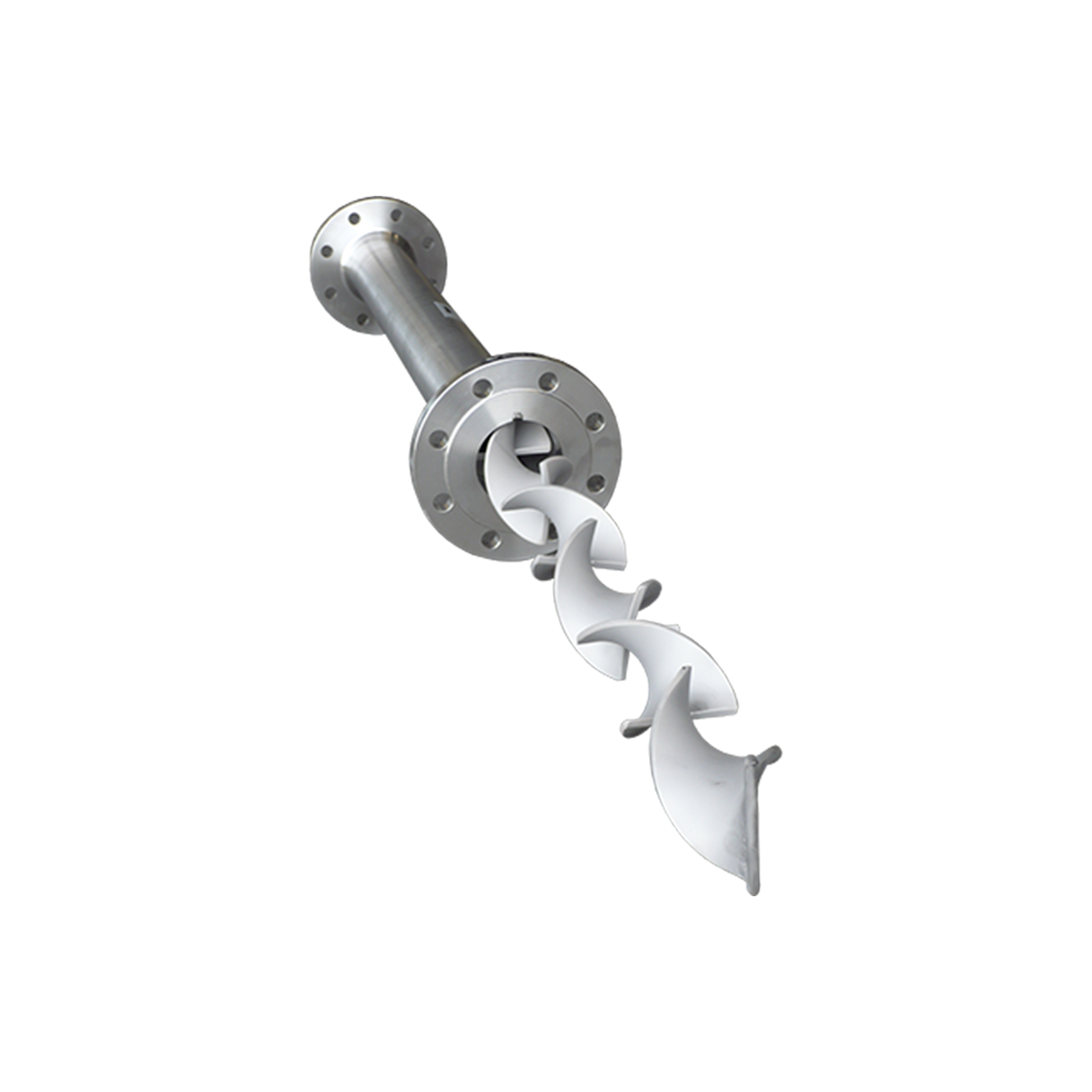
The VerderMix static mixer consists of mixing elements integrated directly into the pipework. There are no moving parts: the flow passes through the stationary inserts and mixes itself. Manufacturer: Verder, VerderMix range. Five types are available — VMV, VML, VMS, VMX and VMW — in diameters ranging from DN4 to DN800.
How a static mixer works
The mixing elements sequentially divide and invert the flow: each subsequent element cuts through the layers formed and reassembles them. The more elements there are, the more homogeneous the resulting mixture.
The manufacturer describes the geometry of the elements as being optimised for turbulent mixing, whilst minimising resistance and energy losses within the system. This is the main trade-off when selecting components: more elements provide better uniformity, but also result in a greater pressure drop across the section.
Mixers are designed to handle liquids and gases in a flow, ranging from low to high viscosity, with or without solid particles.
Five types: VMV, VML, VMS, VMX and VMW
VMV and VML — spiral elements, widest range: DN4–DN800 in metal and DN15–DN150 in plastic, from 2 to 24 elements.
VMS — spiral elements in a hygienic design: DN8–DN800, 2–12 elements, stainless steel only, electropolished surface, all standard hygienic connections.
VMX — X-shaped components, DN17–DN300, 2–24 components.
VMW — V-shaped spiral elements, DN17–DN300, typically 2–6 elements.
Technical characteristics
| Parameter | VMV | VML | VMS | VMX | VMW |
|---|---|---|---|---|---|
| Type of elements | spiral | spiral | spiral | X-shaped | spiral V-shaped |
| Number of elements | 2–24 | 2–24 | 2–12 | 2–24 | mainly 2–6 |
| Diameters, metal | DN4–DN800 | DN4–DN800 | DN8–DN800 | DN17–DN300 | DN17–DN300 |
| Diameters, plastic | DN15–DN150 | DN15–DN150 | — | — | — |
| Materials | SS304, SS316, PVC, PE, PP, PVDF | SS304, SS316, PVC, PE, PP, PVDF | SS304, SS316 | SS304, SS316 | SS304, SS316 components |
| Accession | DIN flanged, ASA, threaded | DIN flanged, ASA, threaded | all common hygiene products | DIN flanged, ASA, threaded | DIN flanged, ASA, threaded |
| Surface | etching or electropolishing | etching or electropolishing | electropolished | etching or electropolishing | etching or electropolishing |
From DN125 upwards, the components are manufactured from welded strips.
Materials, fastenings and surface finishes
Metal: SS304 and SS316 stainless steel. Plastic: PVC, PE, PP and PVDF — available for VMV and VML types in the DN15–DN150 range.
Connections: flanges to DIN or ASA standards, threaded connections, as well as couplings and welded connections. For the VMS hygienic version — all common hygienic connections.
Surface finish: etched as standard, electropolished as an option. VMS is supplied electropolished.
Hygiene and sterilisation processes
The manufacturer states that the product is compatible with chemicals, CIP and SIP processes, as well as with hygienic and sterile environments. The VMS type is designed for such production lines: stainless steel, electropolished surface, hygienic connections.
What is custom-made
The manufacturer does not publish these specifications in its public catalogue — they are determined at the time of selection:
- permissible operating pressure and temperature for a specific model
- the required number of elements for a given component ratio
- pressure drop across the mixer at the operating flow rate
- length of the section and method of connection
Where are static mixers used?
- dosing of reagents into the pipework
- neutralisation and pH adjustment
- in-line mixing of chemicals
- treatment of drinking and industrial water
- Hygienic and sterile production lines with CIP and SIP
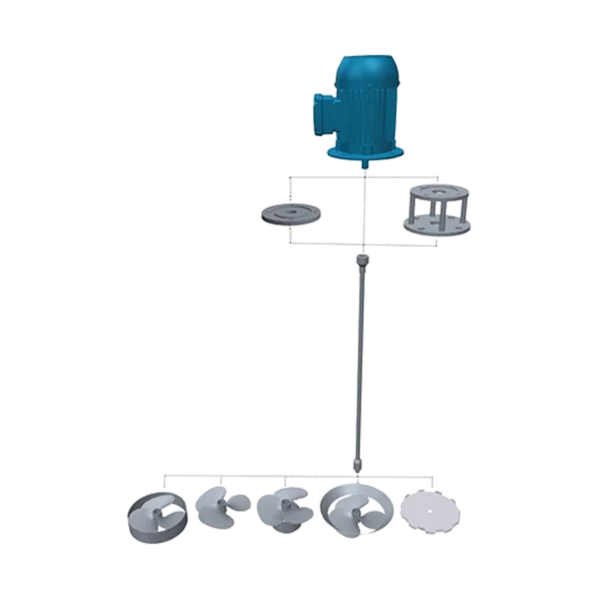
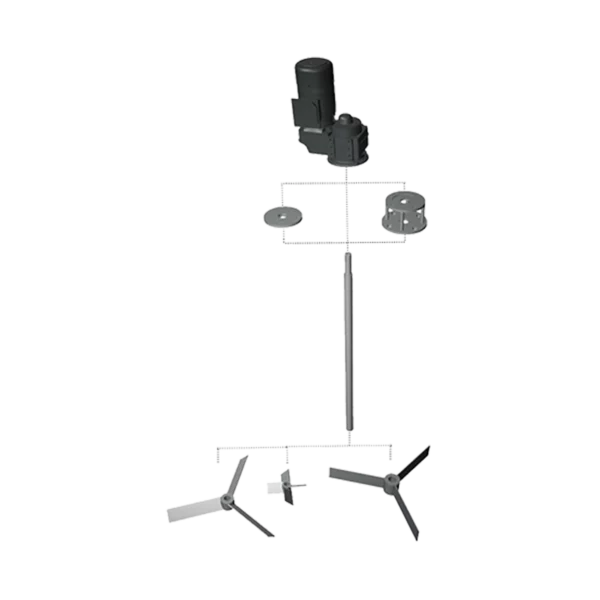
If mixing needs to be carried out in a vessel rather than in-line, this is a different type of equipment — dynamic agitator for vessels or low-speed mixer with a gearbox.
Selection and service from Steiner Ukraine
A static mixer is selected based on the flow conditions: the flow rate, the viscosity of both components and the required mixing ratio determine the type and number of elements, whilst the permissible pressure drop sets an upper limit on this number. Next come the diameter to fit the existing pipework, the material suitable for the medium, and the connection type. We calculate the configuration to suit your line and provide Supply and service. Steiner Ukraine has been operating in the industrial equipment market since 2006.
Manufacturer: VerderMix
Category: Static mixers
Industries: Food, Beverages, Other
Model range: 5 positions