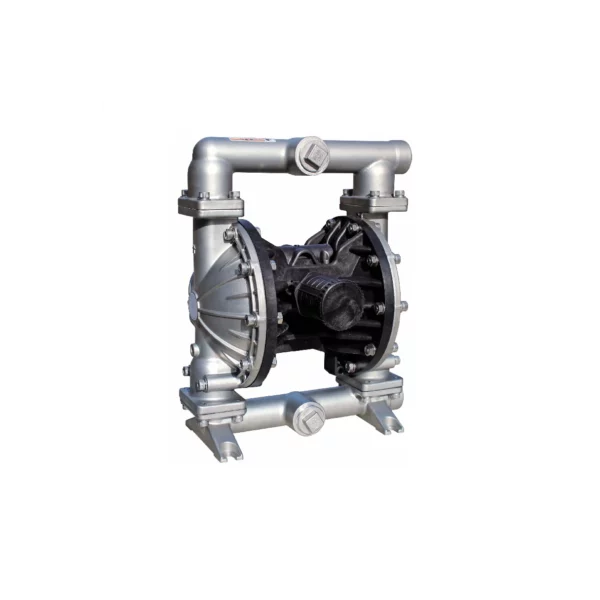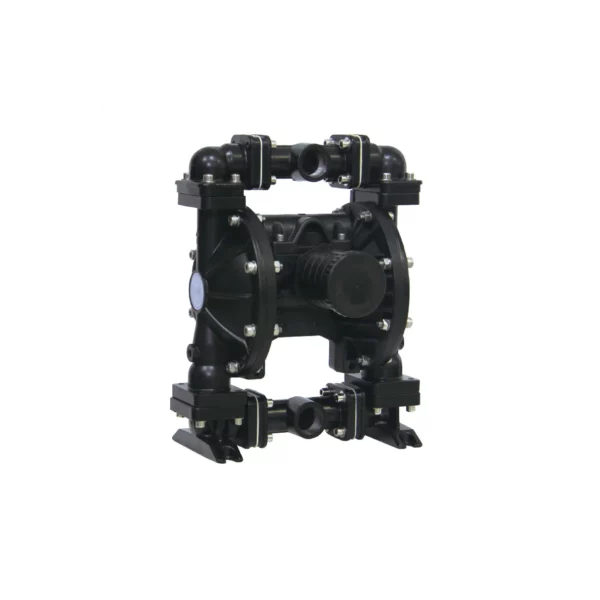

Steiner Pumps – Electric diaphragm pump
An electric motor-driven diaphragm pump is essentially the same MK-series dual-diaphragm hydraulic unit in which the pneumatic drive is replaced by an electric gear motor. The pump retains its self-priming capability, dry-running resistance and leak-free tightness, but does not require a compressor or an air line. General information about the series can be found on the page Steiner Pumps.
When is an electric-motor-driven diaphragm pump needed?
Three situations in which electrical execution is justified.
There is no compressed air on site or there is not enough of it. The MK 80 pneumatic pump consumes up to 9.8 m³/min of air at maximum output. If the compressor room cannot provide this or the line is already loaded, an electric drive resolves the issue.
Continuous automatic operation is required. A pneumatic pump is convenient for periodic operations. For long cycles with a constant load, an electric drive provides more stable operation.
An integration into the automation system is required. The electric motor with a frequency converter is controlled from the cabinet and integrated into the general line algorithm; the pneumatic pump requires separate pneumatic fittings for this.
What changes compared to the pneumatic version
The hydraulic part remains unchanged: the same two diaphragms on a common rod, the same ball valves, the same flow path.
Features: self-priming without the need for pre-filling; dry-running without damage to the pump; leak-proof design; low shear and preservation of the product’s structure; pumping of viscous, abrasive and chemically aggressive liquids.
What changes: the drive becomes a gear motor instead of compressed air. The feed is no longer regulated by air pressure — it is set by the drive's rotational speed. Accordingly, the feed, head, and power consumption are determined by the drive configuration and confirmed upon ordering for a specific frame size.
Options: explosion protection, frequency control, automation
Flameproof enclosure (Ex) Available for electric actuator. The specific marking for the zone and category of the facility is confirmed by documentation upon ordering.
Frequency control. It allows the feed rate to be set from the control cabinet and adjusted according to the process algorithm, rather than manually.
Integration into automation systems. The drive is connected to the general line control system.
Conductive version (C code in part number). Dissipates static charge — used for combustible and flammable environments together with an explosion-proof actuator.
Diaphragm pump with electric motor: which models are fitted with the drive
The electric motor is fitted to all models of the MK series. The geometry of the flow path is independent of the drive type:
| Size | Suction / discharge nozzles | Maximum particle size |
|---|---|---|
| MK 06/10 | 1/4″, 3/8″ | 1.6 mm |
| MK 15/20 | 1/2″, 3/4″ | 2.5 mm |
| MK 25 | 1″ | 4 mm |
| MK 40 | 1 1/2″ | 5 mm |
| Mk 50 | 2″ | 6 mm |
| MK 80 | 3″ | 9.4 mm |
Flow rate, head and drive power for the electric version are determined by the selected geared motor and are confirmed upon ordering. For comparison: in the pneumatic version, these same frame sizes operate in the range from 27 to 1060 l/min with a head of up to 84 m.
Flow path materials
The electric motor-driven version is compatible with all material variants of the series: polypropylene, PVDF, POM, aluminium, cast iron, stainless steel SS304 / SS316 / SS316L, PTFE.
The body material is chosen according to the medium. Polypropylene is universal, up to 65.5 °C. PVDF is for aggressive acids, alkalis and organic solvents, up to 107 °C. POM is for solvents, low friction, up to 65.5 °C. Stainless steel is for food, pharmaceutical and cosmetic manufacturing. Aluminium is for oils, solvents, petroleum products. Cast iron is for abrasive media.
The diaphragm is selected separately: Santoprene, Hytrel, PTFE (Teflon), Viton (FKM), EPDM, Buna-N. Temperature limits range from −40 °C (Viton, Santoprene) to +121 °C (Viton).
Valve balls and seats are available in PTFE, Santoprene, Hytrel, Viton, Buna-N, EPDM, stainless steel, ceramic or polypropylene.
Maintenance and replacement of the membrane
The pump is dismantled using four-bolt connections. The diaphragm can be replaced quickly without removing the pump from the pipeline during previous operations.
Consumables are the diaphragm, balls and valve seats. The casing and actuator are not consumables.
Dry-running resistance is maintained: purging the line after a product change does not damage the pump.
Frequently asked questions about the electric motor-driven diaphragm pump
Is a compressor needed?
No. The electric version operates from the mains electricity supply; compressed air is not required.
What sizes are the electric motors available in?
For all models in the MK series — from MK 06/10 to MK 80.
What is the electrical feed rate?
The delivery rate is determined by the drive rotational speed and is confirmed when ordering for a specific configuration. Pneumatic pumps of the same frame sizes operate in the range of 27–1060 l/min.
Is there an explosion-proof version?
Yes, the explosion-proof actuator is available. The marking for the specific zone is documented and confirmed.
Can the flow be adjusted?
Yes, using a frequency converter. Unlike the pneumatic version, where the feed rate is set by air pressure, here it is set by the drive speed.
Does the pump withstand dry running?
Right. There are no dynamic seals in the design.
What materials are available for the casing?
Polypropylene, PVDF, POM, aluminium, cast iron, stainless steel SS304 / SS316 / SS316L, PTFE.
Does the pump damage the product structure?
There is no impeller in the design, so shear is low. The pump is used for viscous and shear-sensitive media.
When is pneumatic execution better, and when is electric?
Pneumatic — when there is compressed air on site, work is required in an electricity-free zone or operations are intermittent. Electric — when there is no air, continuous long-term operation is required or integration into an automated system.
What is needed for the selection?
The medium and its properties, required flow rate and flow stability, discharge head and pipeline length, available power supply, explosion-protection requirements, need for frequency control and the control method.
Manufacturer: Steiner Pumps
Category: Diaphragm pumps
Industries: Other
Model range: Execution for all standard sizes of the MK series