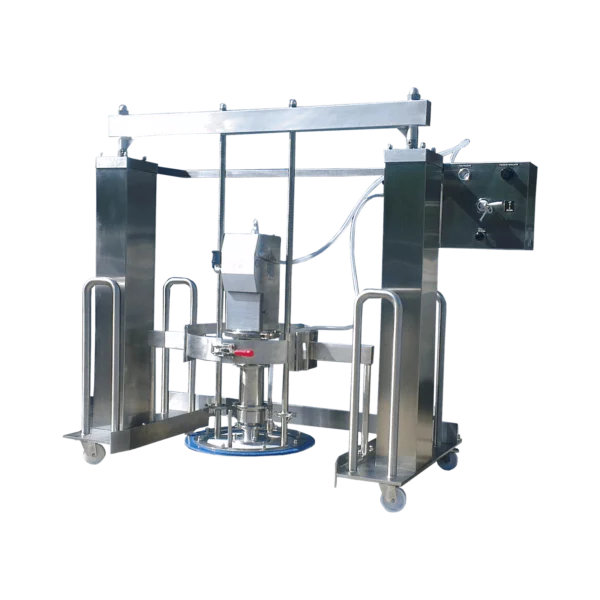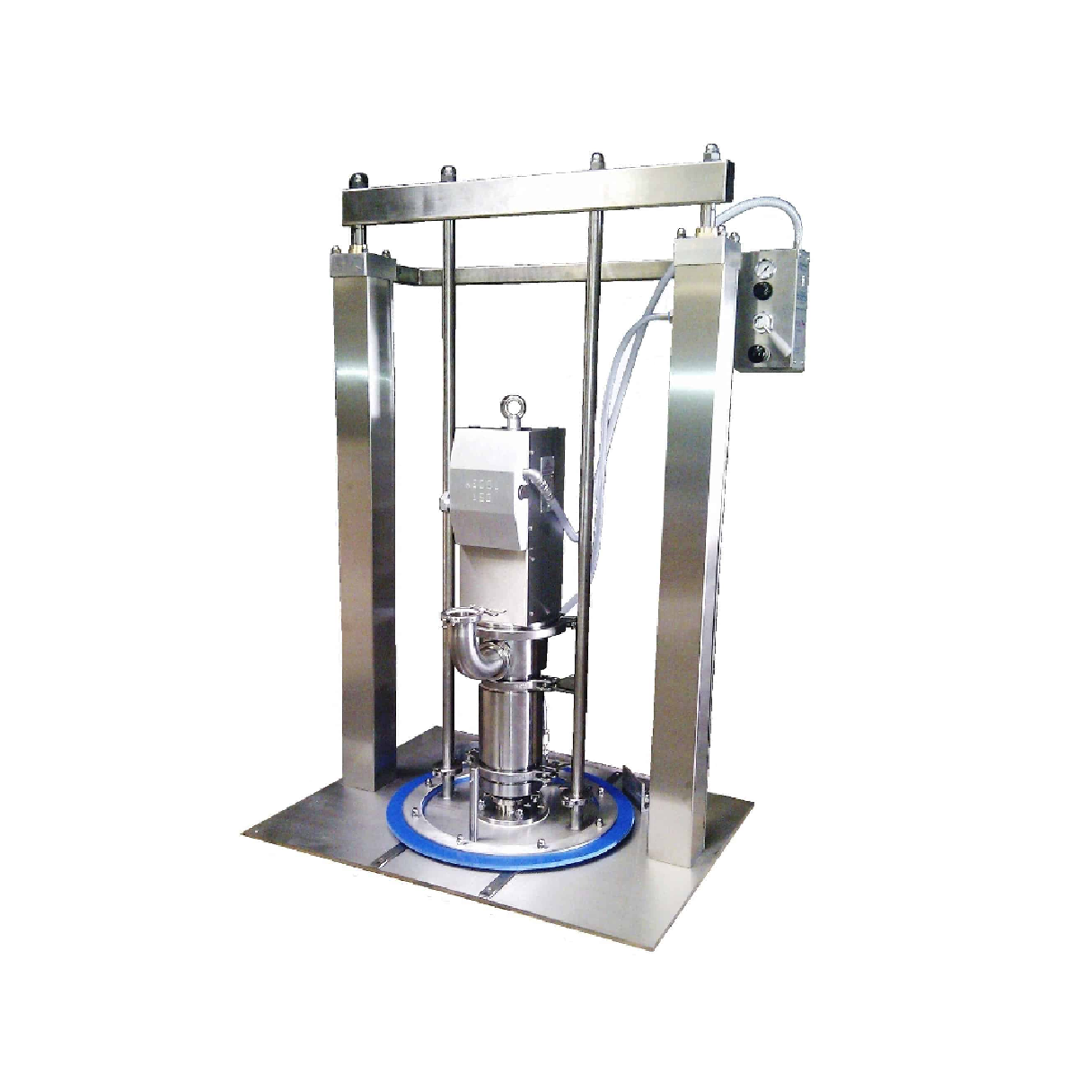
Kecol - Barrel pumping system (Maxiprime)
The Kecol Maxiprime pump is a pneumatic barrel-draining system manufactured by Kecol Pumping Systems Ltd (Faraday Drive, Bridgnorth WV15 5BJ, United Kingdom). The company has over 20 years’ experience working with viscous products in the food, pharmaceutical and cosmetics industries. Its manufacturing operations are certified to ISO 9001.
Maxiprime is designed for pastes and highly viscous products that do not flow freely. Flow rate: up to 130 l/min. Maximum pressure: 175 bar. Viscosity: up to 10,000 poise when cold, i.e. up to 1,000,000 cP. The system allows solid particles up to 12 mm in size to pass through. It is pneumatically driven and requires no electrical power supply.
Kecol Maxiprime pump: technical specifications
| Parameter | Value |
|---|---|
| Productivity | up to 130 litres per minute |
| Maximum pressure | 175 bar |
| Product viscosity | up to 10,000 poise at room temperature (1,000,000 cP) |
| Solid particles | up to 12 mm |
| Type of pump | piston-type, short-stroke, with double cylindrical filling |
| Drive | pneumatic, with adjustable stroke |
| Material | polished stainless steel or painted steel |
| Accession | BSP internal thread or clamp |
| Certification | ATEX, certificate TRAC09ATEX31229X |
| Options | Quick Strip quick-release pressure plate, portion counter |
The manufacturer states that these specifications apply to both versions — the painted and the stainless steel versions. The systems are manufactured to fit specific containers: barrels, IBC containers or mixing tanks.
Why can’t a thick substance be pumped out using a standard pump?
The manufacturer puts it quite simply: a paste or a highly viscous product that does not flow cannot be drawn into the pump. Instead of the product, the pump draws in air and cavitates.
The reason is that a standard pump relies on the product flowing by gravity into the suction pipe. Paste, glue or thick fillings in a barrel do not move under their own weight. A void forms around the suction pipe, and the pump runs dry.
Maxiprime solves this by feeding the product under pressure. The flow is maintained throughout the entire pumping cycle, regardless of the product level in the container.
How dual-cylinder casting and a clamping plate work
The system consists of two components. The first is a Kecol twin-cylinder feed unit. The second is a short-stroke piston pump. Together, they maintain positive feed and prevent the pump from cavitating.
The product is fed into the pump by a pressure plate. It is lowered onto the surface of the product in the container and applies pressure.
The second effect of the same plate is the cleaning of the barrel walls. As the product level drops, the plate wipes the barrel walls. The manufacturer describes the result as the elimination of product losses. For expensive raw materials, this has a direct impact on the cost price: an uncleaned barrel means product written off.
The Quick Strip option allows you to dismantle the clamping plate assembly without the need for tools. This reduces cleaning time when changing products.
Two versions and a mobile version
Painted steel — industrial grade. It is used for technical and chemical products that do not come into contact with food.
Polished stainless steel — hygienic design. In Kecol’s hygienic range, the pump pipes are made from 316L stainless steel, whilst the parts in contact with the product are made from 316 stainless steel. Two types of connection are available: threaded and hygienic clamp. Hygienic models are fitted with a quick-release coupling between the air motor and the pump pipe.
The manufacturer also offers a mobile version of the Maxiprime — available in either a painted or stainless steel finish. This is used where a single system serves several stations or where the drums are not transported to a fixed station.
The Kecol Maxiprime pump in potentially explosive atmospheres
All Kecol pneumatic piston pumps are ATEX-certified. The certificate number is TRAC09ATEX31229X.
The drive is pneumatic. The design contains no electric motor, electronics or cable entries. For areas with potentially explosive atmospheres, this is a key advantage: by design, there are no ignition sources within the actuator. For solvents, adhesives and paints and varnishes, this is often a decisive factor.
The pneumatic motor has an adjustable stroke, so the output can be varied without the need for a frequency converter. A portion counter is available as an option for metered dispensing.
For which products and sectors is the system intended?
The manufacturer lists three areas of application: pharmaceuticals and cosmetics, food processing, and the chemical and industrial sectors.
Typical products include creams, ointments and gels in the pharmaceutical industry; emulsions and pastes in the cosmetics industry; condensed milk, fillings, jams and tomato paste in the food industry; adhesives, sealants, lubricants and pigment pastes in the chemical industry.
They all have one thing in common: the product does not flow by gravity. Systems for draining containers are covered in the section pumping and mixing systems. Equipment for food production — in in a separate section.
How does Maxiprime differ from Megaprime and Powerprime?
Kecol manufactures three core ranges of extraction systems.
| Ruler | Productivity | Pressure | Solid particles | Viscosity |
|---|---|---|---|---|
| Powerprime | up to 45 litres per minute | 175 bar | up to 12 mm | up to 150,000 cP |
| Maxiprime | up to 130 litres per minute | 175 bar | up to 12 mm | up to 10,000 poise |
| Megaprime | up to 130 litres per minute | 175 bar | up to 15 mm | up to 10,000 poise |
Powerprime is a single-station system with a pressure plate and a wiping ring. It is used for moderately viscous products and small batches. Its viscosity limit is approximately seven times lower.
Maxiprime and Megaprime are constructed in the same way: a double-cylinder design plus a short-stroke piston pump. Both have a viscosity of 10,000 poise and a flow rate of 130 litres per minute. The only difference is the particle size: 12 mm for the Maxiprime compared with 15 mm for the Megaprime.
Practical tip: if the product is homogeneous or contains small particles, Maxiprime is sufficient. If the product contains pieces of fruit, granules or crystals larger than 12 mm, you will need Megaprime. All the manufacturer’s products are available at the Kecol page.
How to choose a Kecol Maxiprime pump at Steiner Ukraine
Six pieces of information are required for selection: the type and size of the container, the flow rate in litres per minute, the product name, its viscosity when cold, the presence and maximum size of solid particles, and the type of outlet connection.
Please specify separately whether a hygienic design in 316 stainless steel is required and whether a portable version is needed. Another point to consider is the available compressed air pressure and flow rate on site, as the drive is pneumatic.
Steiner Ukraine supplies Kecol equipment, including design, configuration, commissioning and spare parts. The scope is described in the section services. Related entries — in the sections industrial pumps and process equipment. Sector-specific recruitment — in sector-specific solutions.
Frequently Asked Questions
What is the flow rate of the Kecol Maxiprime pump?
Up to 130 l/min. The actual value depends on the viscosity of the product and the air motor’s stroke setting.
What viscosity range does Maxiprime support?
Up to 10,000 poise at room temperature, i.e. up to 1,000,000 cP. The product does not require heating for pumping.
Does the system allow solid particles to pass through?
Yes, up to 12 mm. For inclusions larger than 12 mm, the Megaprime range is used, which has a limit of 15 mm.
Does Maxiprime run on mains electricity?
No. The drive is pneumatic; no power supply is required. A source of compressed air is required.
Can the system be installed in an explosion-hazardous area?
Yes. All Kecol pneumatic piston pumps hold ATEX certificate number TRAC09ATEX31229X.
Is Maxiprime suitable for foodstuffs?
Yes, in a hygienic design made from polished stainless steel. The pump pipes in the hygienic range are made from 316L, whilst parts in contact with the product are made from 316.
Is there a mobile version?
Yes. The manufacturer offers the Maxiprime in a painted or stainless steel finish.
How much of the product is left in the barrel?
The pressure plate wipes the sides of the container as the product level drops. The manufacturer describes the result as the elimination of product losses.
How does Maxiprime differ from Megaprime?
They are identical in terms of flow rate, pressure and viscosity. The difference lies in the maximum particle size: 12 mm versus 15 mm.
How much does a Kecol Maxiprime pump cost?
The price depends on the finish (stainless or painted steel), whether it is a fixed or mobile model, the container size, the connection type and whether the Quick Strip and portion counter options are included. Please send us the container type, product, viscosity and required output — we’ll prepare a quote.
Manufacturer: Kecol
Category: Barrel pumping systems
Industries: Food, Beverages, Pharmaceutical, Other
Model range: 2 positions