
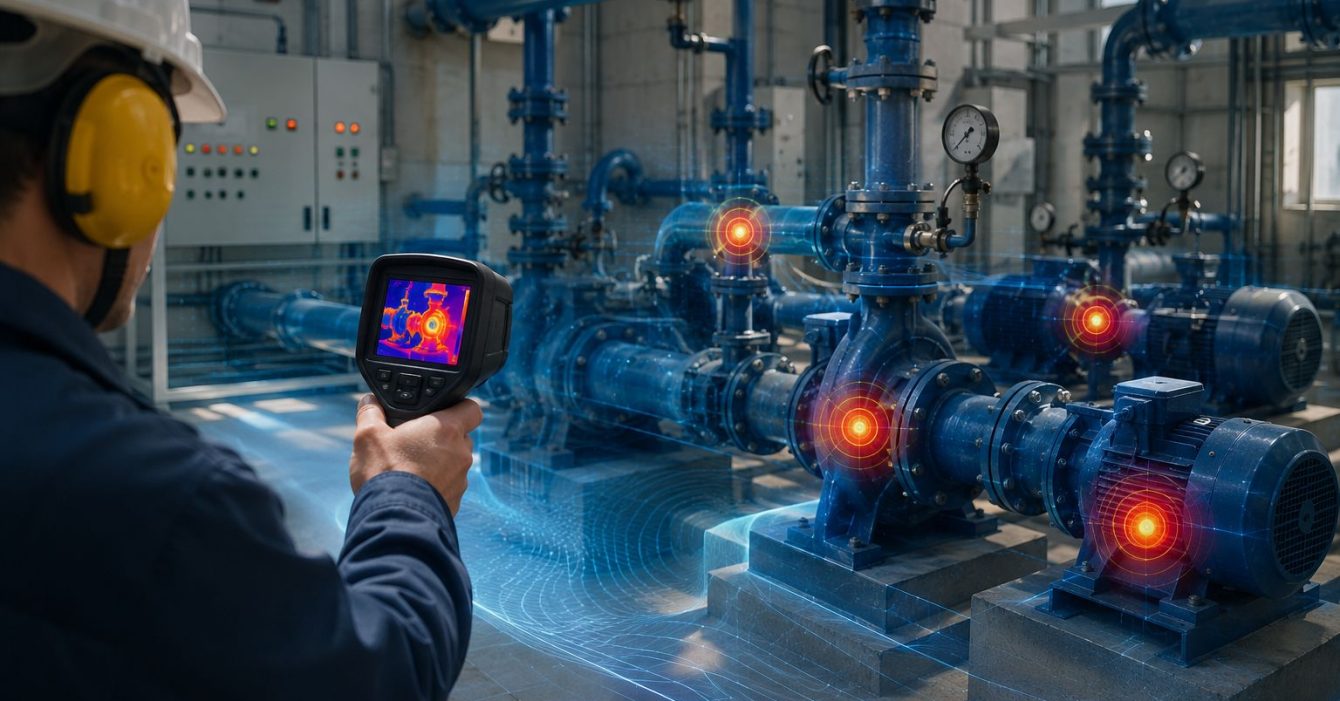
In 2026 the issue of energy efficiency for industrial enterprises became not merely a way of optimising costs, but a factor of competitiveness. This applies particularly to pumping stations, which in many industries are one of the largest consumers of electricity.
In practice, a considerable proportion of enterprises overpay for electricity every day because of hidden losses in their pumping equipment. And the problem is by no means always the “old pumps”. Often the cause is incorrect operating modes, design errors, worn elements of the system or improper load management.
That is exactly why an energy audit of pumping stations makes it possible not only to find the problem areas, but also to determine where the enterprise is in fact losing money.
Why pumping stations consume more energy than they should
Many systems operate for years without a comprehensive efficiency analysis. Over time the equipment wears out and production loads change, while the operating parameters remain unchanged.
As a result, typical problems arise, among them excessive electricity consumption, a drop in capacity, motor overloads, unstable pressure in the system and more. In many cases the enterprise does not even suspect that the pumping station is operating at an efficiency significantly below the design level.
What is an energy audit of a pumping station
An energy audit is a comprehensive analysis of the operation of pumping equipment, electricity consumption and the hydraulic system with the aim of identifying energy losses and the potential for optimisation.
In effect, an audit makes it possible to answer the key questions:
- where exactly the losses arise;
- which pumps are operating inefficiently;
- whether the system matches the real load;
- how much electricity is being wasted;
- which upgrades will give the greatest economic effect.
For modern production this is no longer an “additional check”, but an instrument of strategic cost management.
Stage 1. Analysis of actual electricity consumption
At the first stage of the energy audit, specialists collect and analyse real data on the operation of the pumping station. The actual daily electricity consumption, the level of load on the motors and the stability of their operation at different times of the day are assessed. The pump operating schedules, peak loads, the duration of equipment operation without stoppages and the frequency of system start-ups and shutdowns are also studied.
It is precisely this analysis that makes it possible to understand whether the pumping station is operating in the optimal mode, or whether the enterprise is already wasting excess electricity because of incorrect settings, overloads or inefficient operation of the equipment.
Very often it emerges at this stage already that some of the pumps are operating in an inefficient mode or are being used where their capacity is excessive.
Stage 2. Inspection of the hydraulic system
One of the largest sources of losses is hydraulic problems.
During the audit the following are checked:
Pressure losses in the pipelines
Worn pipes, an incorrect diameter or fouling of the system can substantially increase energy consumption.
Leaks
Even minor leaks are capable of creating constant hidden losses.
Incorrect balancing of the system
If the system operates unevenly, the pumps are forced to compensate for load fluctuations.
Cavitation
Cavitation not only reduces efficiency, but also accelerates the destruction of the equipment.
Stage 3. Analysis of pump operation
After the hydraulic system has been checked, detailed diagnostics of the pumps and electric motors themselves are carried out. At this stage specialists analyse the actual efficiency of the equipment, check how closely the pump is operating at its optimal duty point and also assess the stability of the load during operation.
In addition, the level of vibration, the temperature of the bearings, the technical condition of the impeller and the overall efficiency of the motors are monitored. Such an inspection makes it possible to identify hidden problems that are not always noticeable during normal operation of the system.
At many enterprises the pumping equipment operates outside optimal modes for years, as a result of which electricity consumption rises substantially, the wear of components accelerates and maintenance costs increase.
Stage 4. Inspection of the automation systems
A modern pumping station without automation often operates less efficiently even when the equipment is in good order.
Particular attention is paid to:
- variable frequency drives;
- PLC controllers;
- SCADA systems;
- pump control algorithms;
- automatic pressure regulation;
- the operation of sensors.
In many cases even a basic upgrade of the automation makes it possible to reduce electricity consumption substantially.
Where money is most often lost
Practice shows that the biggest losses usually arise from a combination of small problems rather than from one critical fault.
The most widespread causes of overconsumption:
- pumps run “at maximum” without any need for it;
- the equipment has been selected with an excessive margin;
- there is no variable frequency control;
- the system operates at unstable pressure;
- there are hidden leaks;
- the pipelines have high resistance;
- the equipment is worn;
- the automation is set up incorrectly.
That is exactly why a professional energy audit always assesses the system as a whole.
What economic effect does an energy audit give
After an energy audit has been carried out, enterprises usually receive a clear modernisation plan with a forecast economic effect.
Most often this makes it possible to:
- reduce electricity costs;
- reduce the accident rate;
- extend the service life of the pumps;
- lower the workload on personnel;
- optimise the operation of the station;
- reduce downtime;
- stabilise production processes.
In some cases modernisation of a pumping station makes it possible to cut energy costs by 20–30% without completely replacing the equipment.
When an energy audit is particularly necessary
Carrying out an energy audit is particularly relevant if an enterprise faces the following situations:
- electricity bills have risen sharply;
- the pumping station breaks down frequently;
- the capacity of the system has fallen;
- the equipment operates unstably;
- pressure fluctuations occur;
- modernisation of production is planned;
- the enterprise is moving towards automation;
- the cost price of the product needs to be reduced.
In modern industry the energy efficiency of pumping systems has a direct effect on the financial stability of an enterprise.
Energy efficiency as part of an enterprise strategy
Today an energy audit of pumping stations is ceasing to be a one-off technical check. For many production facilities it is already an element of the systematic management of resources and costs.
Enterprises that regularly analyse the efficiency of their pumping equipment gain significantly better control over energy consumption, maintenance costs and production stability.
That is exactly why a modern energy audit is not only about the technical condition of the pumps, but about finding the points where the enterprise is losing profit every day.


