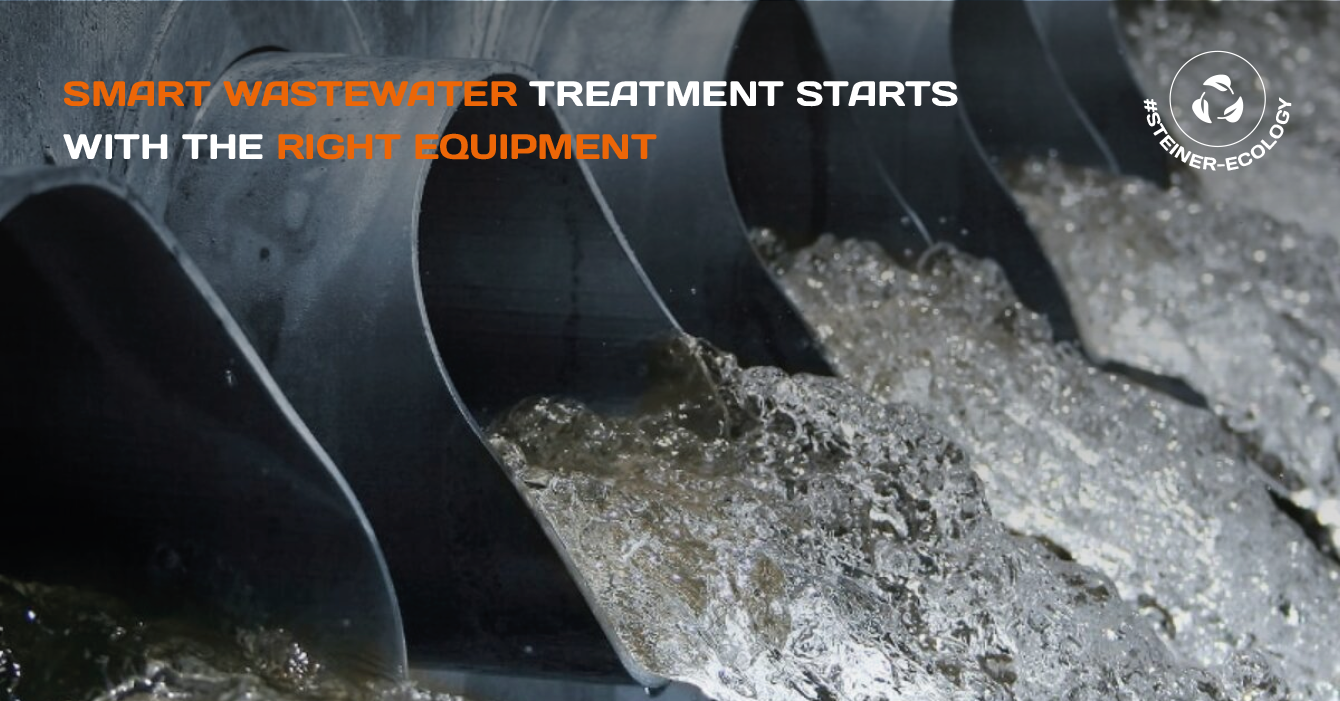
Wastewater treatment is a critical process for industry and municipal systems. A significant portion of facilities operate with outdated equipment, leading to regular repairs, excessive energy costs, and the risk of non-compliance with regulations.
Steiner Ukraine спеціалізується на модернізації та інтеграції систем очищення стічних вод «під ключ». Нижче ми розкажемо де виникають проблеми та як їх вирішувати з користю для економіки підприємства.
Why systems are inefficient
- FOG in food production. Fats and oils form emulsions, settle in pipelines, and reduce the efficiency of pumps and flotation units.
- Workload in the public sector. Excess sludge, peak inflows, and unstable recirculation overload the facilities.
- Outdated blowers. In many cases, old units consume too much electricity and become economically unfeasible: low efficiency under real operating conditions, lack of precise control, frequent downtime.
- Pumping equipment. The market is evolving: modern pumps are more durable and energy-efficient thanks to improved hydraulics, anti-clog impellers, and IE3/IE4 motors. Older models often operate outside optimal points and increase OPEX.
- Lack of automation. Without integrated SCADA/telemetry and online sensors (DO, ammonium, nitrates, TSS), the process is controlled “manually,” which increases the risk of errors and costs.
- Regulations. BOD, COD, TSS, nitrogen/phosphorus forms, and pH are monitored. A violation of even one parameter results in fines and reputational risks.
Modern treatment train (cleaning chain)
- Pre-treatment: screens, grit chambers, grease trap/DAF (especially for food industry wastewater).
- Primary treatment: primary clarifiers (as per scheme).
- Biological treatment: CAS, SBR, MBR, MBBR, IFAS.
- Biomass separation: secondary clarifiers (for CAS/SBR) or membranes in MBR.
- Tertiary/final treatment: filtration, UV/chlorination; if required — sorption, additional nitrogen/phosphorus removal.
- Sludge treatment: thickening → anaerobic digestion (biogas) → dewatering (decanter, screw/belt press) → disposal/beneficial use.
Each stage affects the next: if the pumps ‘sag’ at the inlet or aeration is ineffective, the final stages will not achieve the design quality.
Sludge dewatering — the key to economy
Properly organised dewatering directly affects TCO (total cost of ownership):
- Higher dry solids content (%DS) = lower volume/mass for disposal → reduced logistics costs and disposal fees.
- Less energy for further drying/thermal treatment (less water to evaporate).
- More water is returned to the process thanks to high-quality filtrate/centrate.
- More stable bioprocesses due to uniform sludge removal.
Tools: decanter centrifuges, screw/belt presses (selected according to sludge type); optimized polymer conditioning; automatic control of %DS, filtrate TSS, polymer consumption, and energy use.
What modernisation brings: air blowers, pumps, automation
- Aeration/blowers. Transition to energy-efficient units (including with VFD) and process-based control (DO/ammonium) significantly reduces the energy consumption of the biological stage and stabilizes nitrification/denitrification.
- New-generation pumps. Selection according to duty point, high-efficiency hydraulics, anti-clog impellers, IE3/IE4 motors, variable frequency control → fewer failures, lower losses, and energy savings.
- SCADA and analytics. Online sensors, trends, alarms, and load-based control algorithms reduce the human factor and lower operating costs thanks to stable operation and preventive maintenance.
How this affects TCO
- Energy consumption ↓ thanks to more efficient blowers and pumps and operation at optimum points.
- Service and downtime ↓ — more durable units, predictive diagnostics.
- Reagents are stabilised — more even load on biology.
- Penalty risks ↓ — consistent compliance with standards.
- Human factor ↓ — automation and clear KPIs.
The Steiner Approach до очищення стічних вод
- Wastewater audit and load variability.
- Pre-project and CAPEX/OPEX model with comparison of modernization scenarios.
- Equipment selection and supply: pumps, mixers, DAF, energy-efficient blowers, aerators, thickeners, decanters/presses, automation (leading European manufacturers).
- Integration/SCADA, installation, commissioning, staff training, service.
Conclusion
Problems of wastewater treatment cannot be solved with “patches.” A systematic modernization is needed, in which efficient blowers, modern pumps, automation, and high-quality dewatering together reduce the total cost of ownership (TCO) and ensure stable discharge quality.
Steiner Ukraine пропонує інтегровані рішення від аудиту до сервісу, щоб гарантувати нормативи, знизити витрати та підвищити надійність.


